Hytera DMR Solutions
Island-Wide Resilience: Why Hytera DMR is the Smart Infrastructure Move for the USVI
In the U.S. Virgin Islands, communication isn’t just about convenience; it’s about structural survival. Between the steep, volcanic peaks of St. Thomas, the dense forests of St. John, and the vast ocean gap separating them from St. Croix, the territory presents a masterclass in RF (Radio Frequency) challenges.
When a Category 5 hurricane compromises commercial cell towers, relying purely on cellular or public broadband infrastructure becomes a massive operational risk. For private enterprises, maritime fleets, utility providers, and localized security forces, true resilience requires independent, owned infrastructure.
Hytera Digital Mobile Radio (DMR) systems offer a premier balance of hardware durability, spectrum efficiency, and self-contained network security tailored specifically for the unique vulnerabilities of the USVI.
1. Absolute Independence from Cellular Dead Zones
Unlike Push-to-Talk over Cellular (PoC) which borrows bandwidth from local cellular networks, a Hytera DMR Tier II or Tier III Trunked system is a completely private network.
The Reality of the USVI Grid: Power grid fluctuations and Category 5 weather events routinely threaten commercial cellular towers. If the commercial networks crash, public cell-phone and PoC solutions go down with them.
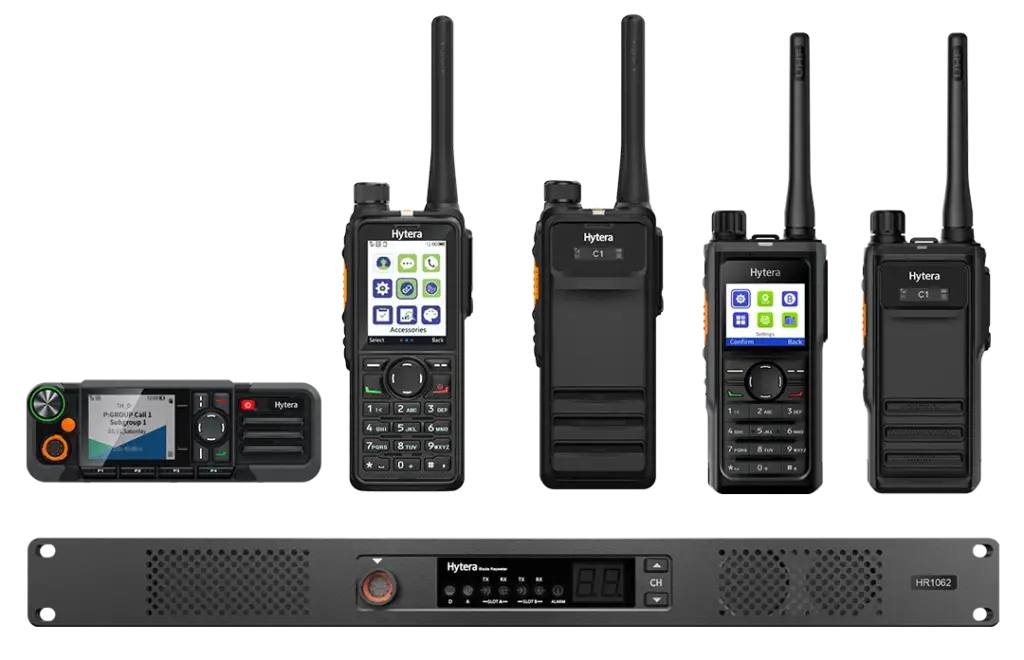
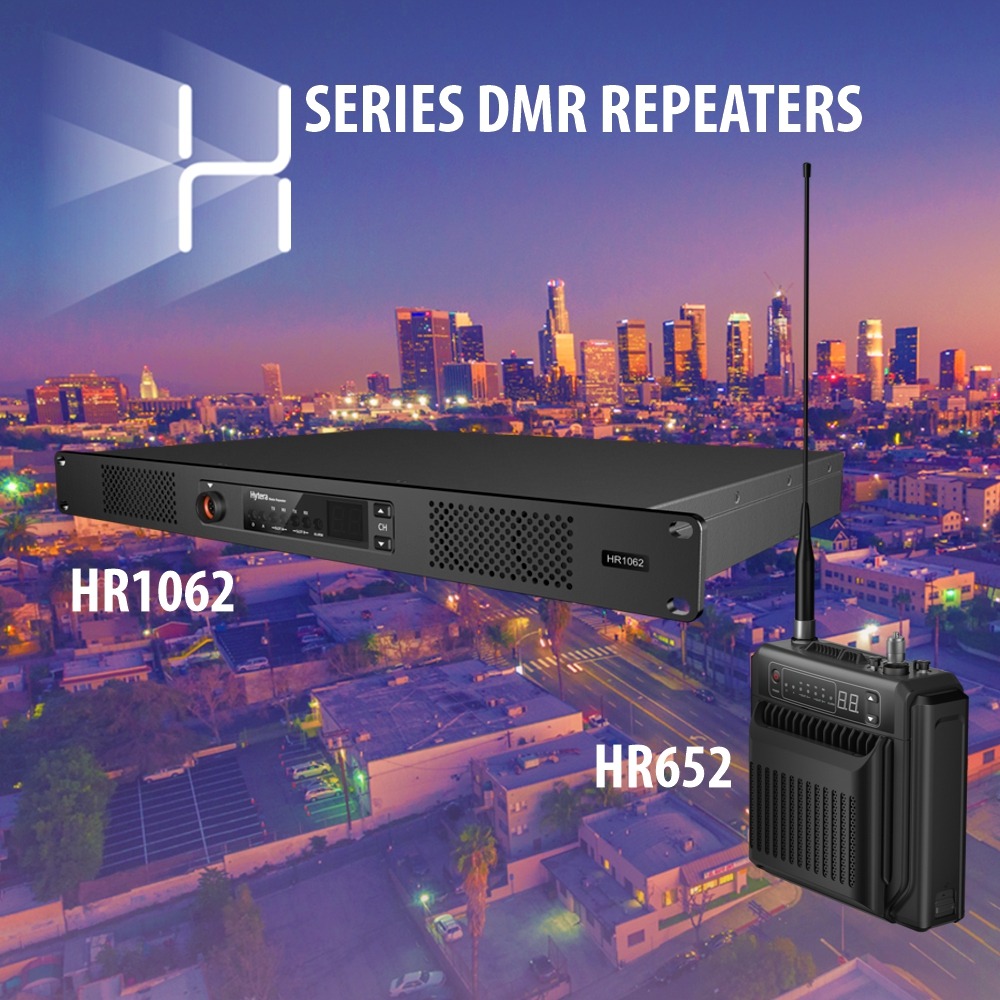
The DMR Advantage: By deploying localized Hytera repeaters (such as the rugged, compact HR652 or the high-power HR1062) equipped with solar backups or independent generators on key island vantage points, businesses maintain absolute control over their communications. Your team can coordinate across valleys, mountain passes, and marinas even if the rest of the islands are entirely blacked out.
2. Double the Capacity via Pseudo-Trunking
Frequency spectrum in a US territory is highly regulated by the FCC. Buying up multiple frequency licenses in a tightly contained island environment can be incredibly expensive and restrictive.
Hytera handles this limitation through 2-slot TDMA (Time Division Multiple Access) technology and proprietary Pseudo-Trunking:
How it works: A single 12.5 kHz radio channel is digitally divided into two independent “time slots.”
The ROI for USVI Operations: Instead of paying for two separate frequencies, a resort, port authority, or private security firm can utilize a single frequency to run two simultaneous voice or data transmissions. Dispatch can speak to security on Slot 1, while engineering coordinates facility management on Slot 2—with zero interference.
3. Overcoming Multi-Island Distances and Valleys
The geographic profile of the USVI includes steep ridge lines that block standard line-of-sight signals, and 40 miles of open ocean between the northern islands and St. Croix.
Hytera’s DMR infrastructure bridges these gaps smoothly:
IP Multi-Site Connect: Hytera repeaters can be linked together using standard IP networks (such as a local microwave link or a private fiber backbone). This allows a hotel operator with properties in both St. Thomas and St. John to seamlessly link their communications into a singular, unified talkgroup.
Superior Digital Range: Digital radio signals maintain clear, noise-canceled audio right up to the very edge of their coverage zone, unlike analog systems that degrade into static when trying to push through dense Caribbean foliage or maritime salt fog.
4. Ruggedized for Marine and Tropical Abuse
The Caribbean environment is highly corrosive. Saltwater mist, intense UV exposure, and fine dust kicked up by tropical winds can short out standard electronics in weeks.
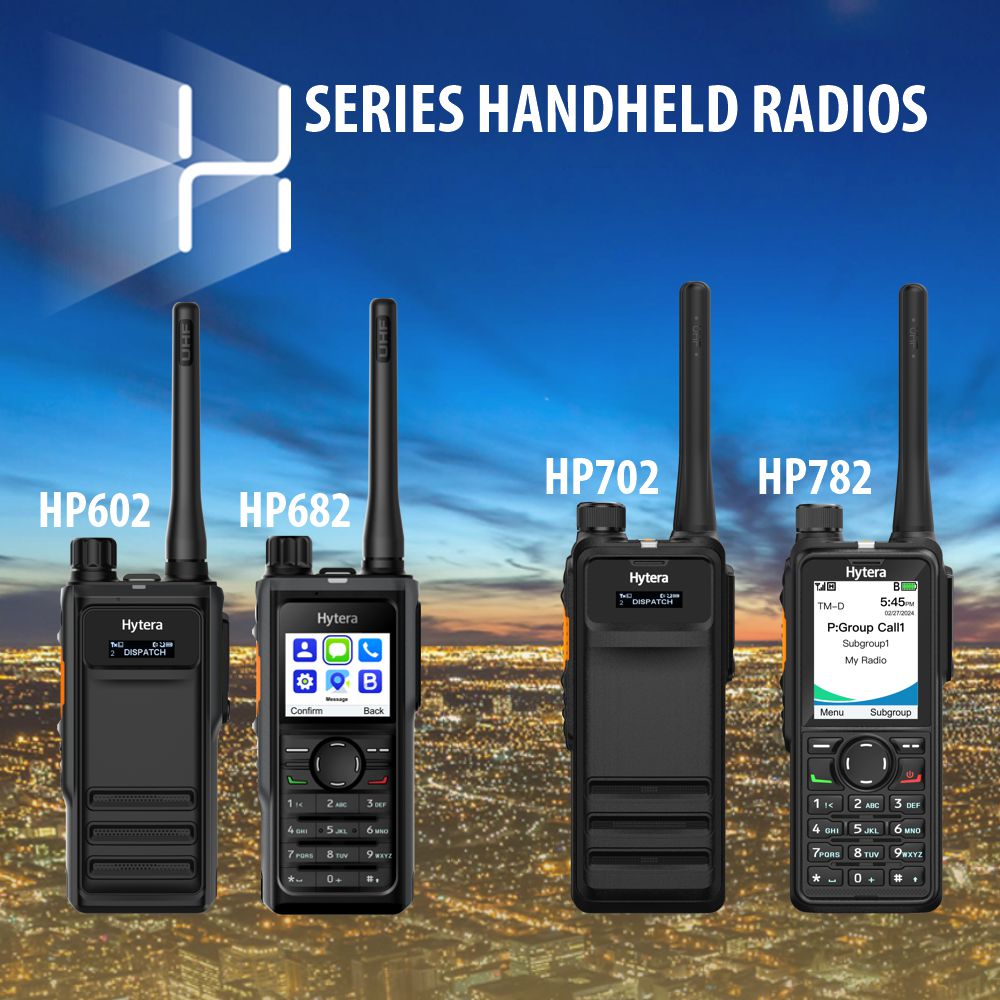
Hytera’s high-tier DMR portables (like the HP782 and HP682 series) are custom-engineered for these extremes:
IP68 Submersion Rating: These radios can survive complete immersion in water (up to 2 meters for 4 hours), making them highly durable against flash tropical downpours and accidental drops over boat gunwales.
Anti-Corrosion Design: The internal chassis and external audio ports are engineered to resist salt-fog erosion, drastically extending the lifecycle of your capital investment compared to consumer-grade devices.
AI-Powered Noise Cancellation: In high-noise environments—like a wind-swept harbor, a busy concrete processing site, or next to a backup diesel generator—Hytera’s integrated AI filters out ambient background racket, ensuring that only clear voice transmission gets through.
5. Migration Flexibility from Legacy Systems
Many private operations in the USVI still utilize older analog two-way radios. Tearing out an entire fleet of equipment all at once is a logistical and financial nightmare.
Hytera DMR radios support Mixed-Mode Analog/Digital scanning. They dynamically detect whether an incoming signal is digital or analog and switch automatically. This allows organizations to swap out older radios for modern Hytera hardware gradually over time, ensuring continuous operational uptime during the transition.
Summary of Strategic Value
While PoC radios are an exceptional tool for flexible, everyday wide-area communications, Hytera DMR systems represent a fortified line of defense. For critical infrastructure, maritime operations, and enterprises where communication failure is not an option, building a private, ruggedized DMR network guarantees that when everything else goes dark, your operation stays online.