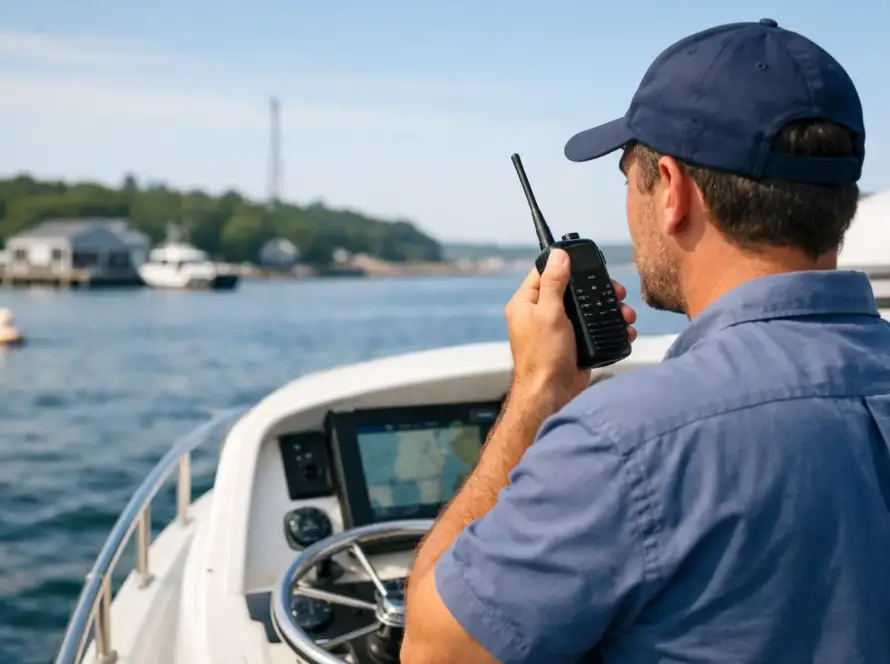
A radio that works fine in a warehouse can fail fast on open water, across hilly terrain, or between concrete buildings. That is why knowing how to choose commercial radios starts with your actual operating conditions, not a product brochure. For many organizations, the wrong decision does not just create inconvenience. It creates missed calls, safety gaps, slower response times, and higher replacement costs.
Commercial radios are often treated like a simple equipment purchase. In practice, they are part of an operating system. The right setup depends on where your teams work, how they move, how often they talk, and what happens when communication drops at the wrong moment.
How to choose commercial radios for real operations
The first question is not which model to buy. It is what problem the radios need to solve. A hotel, marine operator, construction crew, utility team, and public agency may all need dependable voice communications, but the technical requirements are not the same.
Start with range, but do not reduce range to a single number. Coverage depends on terrain, structures, interference, and whether users are indoors, offshore, in vehicles, or moving between sites. In island environments especially, elevation changes, dense construction, and distance between work areas can change performance significantly. A radio system should be matched to the coverage footprint you need on your worst day, not your easiest one.
Just as important is user count. A small team with light voice traffic can often operate efficiently on a straightforward setup. A larger operation with multiple departments, dispatch needs, or separate talk groups needs more structure. If everyone is sharing one channel and talking over each other, the issue is not user behavior alone. It may be a system design problem.
Start with the environment, not the spec sheet
Commercial radios live in the real world. Salt air, rain, dust, vibration, heat, and long shifts all matter. So do gloves, background noise, and whether a worker is climbing, driving, or carrying tools while trying to transmit.
This is where build quality becomes operational, not cosmetic. A radio used in maritime service or outdoor fieldwork needs durability that matches the job. Water resistance, dust protection, loud audio, solid accessory connections, and battery endurance are not premium extras if the radio is exposed to harsh conditions every day.
The physical form factor also matters more than many buyers expect. A compact radio may be easier for hospitality or retail teams to carry discreetly. A larger unit with stronger audio and a bigger battery may be better for industrial or marine use. There is always a trade-off. Smaller radios improve comfort, but they may limit battery size or ease of use with gloves.
Analog, DMR, or PoC depends on your use case
One of the biggest decisions in how to choose commercial radios is the underlying technology. Not every organization needs the same platform, and there is no single best answer for all operations.
Analog radios still make sense in some cases. They can be cost-effective, familiar to users, and appropriate for simpler local communications. If your team operates in a contained area and your current system meets your needs, analog may still be practical. The downside is limited scalability and fewer advanced features.
DMR, or digital mobile radio, is often the better fit for organizations that need stronger audio clarity, better spectrum efficiency, improved capacity, and room to grow. It is well suited for business and public-sector environments where reliability, group management, and system control matter. DMR can also support a more structured communications approach as operations become more complex.
Push-to-Talk over Cellular, or PoC, is a strong option when users need wide-area communication across islands, vehicles, remote sites, or distributed teams. Because it uses cellular and data connectivity, it can extend communications well beyond traditional radio coverage limits. That said, PoC depends on network availability and should be evaluated against your coverage realities, redundancy needs, and operating risk.
For some organizations, the answer is not one or the other. A blended communications strategy may be the most practical path, especially when teams work across fixed sites, vehicles, and mobile field environments.
Features should follow workflow
It is easy to overbuy features that look impressive but do little for your daily operations. Focus on what improves response time, coordination, and safety.
If supervisors need to reach separate crews without disrupting everyone else, you need organized talk groups. If incidents must be documented, recording or dispatch integration may matter. If lone workers operate in isolated areas, emergency alerts and worker safety features become more than convenience. GPS, text messaging, encryption, and remote management can all be useful, but only when they serve a clear operational purpose.
A good rule is simple: if a feature does not improve communication discipline, accountability, or uptime, it should not drive the purchase.
Battery life, audio, and accessories affect daily performance
Teams usually notice three things first: whether the radio lasts a full shift, whether they can hear clearly, and whether the accessories hold up. These are not small details. They shape adoption and reliability every day.
Battery planning should reflect real shift length, not ideal lab conditions. If your crews work extended shifts, double shifts, or long days in the field, battery strategy matters. That may mean higher-capacity batteries, spare battery rotation, vehicle chargers, or multi-unit charging setups.
Audio quality is just as critical. In high-noise settings, weak audio leads to repeats, delays, and missed instructions. Look for radios designed for clarity in noisy environments, with speaker microphones or earpieces that fit the work. A radio can be technically advanced and still fail the user if nobody can hear it over engines, wind, or crowd noise.
Accessories deserve more attention than they usually get. Cheap speaker mics, weak chargers, and poor earpiece connections create constant failure points. If radios are business-critical, accessories should be treated as part of the system, not afterthoughts.
Coverage testing matters more than assumptions
Too many radio purchases are based on stated range claims or a quick assumption that one site is similar to another. It rarely works that way.
Real coverage testing helps identify dead spots, building penetration issues, marine communication limitations, and areas where repeaters or system adjustments may be needed. This step is especially valuable in locations where geography changes quickly from urban density to open water to elevated terrain.
A system that sounds good on paper can perform poorly in stairwells, mechanical rooms, loading zones, or between islands and remote sites. Testing exposes the gaps before deployment, when the cost of correction is lower.
Support, repair, and lifecycle planning are part of the buying decision
If you are evaluating how to choose commercial radios, do not stop at purchase price. The more important question is what it takes to keep the system working over time.
Commercial radio systems need programming, user setup, battery replacement planning, firmware updates, accessory management, and occasional repair. If radios are supporting operations, safety, or customer service, downtime has a cost. That makes local support and long-term service capacity part of the selection criteria.
This is where buyers often benefit from working with a communications partner rather than simply ordering hardware. An authorized Hytera dealer like Cwave Communications can help match the platform to the environment, configure the system properly, and support it after deployment. That matters more than a low initial number on a quote.
Ask better questions before you buy
A productive buying process usually starts with a few direct questions. Where do your people actually lose communication today? How many users need to talk at once? Do you need island-wide reach, building coverage, marine coverage, or all three? What is the cost of a missed call during a normal shift, and during an emergency?
You should also ask how the system will scale. If you add users, sites, vehicles, or departments next year, will the radios still fit the operation? Replacing an undersized system too early is often more expensive than choosing the right architecture from the beginning.
The best radio decision is rarely the one with the most features or the lowest upfront cost. It is the one that fits the environment, supports the workflow, and stays dependable when conditions are less forgiving than expected. Choose for the job your teams actually do, and the radios will prove their value every day.