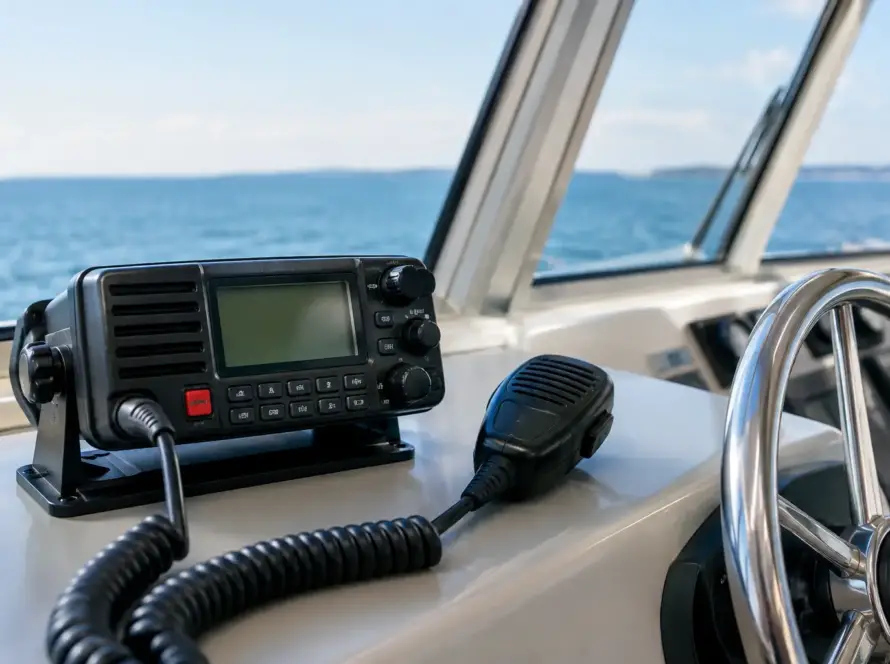
When a crew is split between a port, a hillside job site, and a vehicle moving between islands, weak communication turns into slow response, missed handoffs, and avoidable risk. Radio communications solutions for business are still one of the most dependable ways to keep teams connected when cell service is inconsistent, operations are mobile, or response time matters more than convenience.
For organizations in the U.S. Virgin Islands, that reliability is not a nice extra. It is part of day-to-day operations. Terrain, distance, weather, marine activity, and infrastructure variability all affect how well a communication system performs. The right solution is usually not just a matter of buying radios. It requires matching coverage, device type, network design, and support to the way the organization actually works.
What radio communications solutions for business need to solve
Business radio systems are often evaluated too narrowly. Buyers compare handset features, audio quality, or price per unit, but the real question is operational fit. A communication system should support how teams move, where they work, and what happens when conditions are less than ideal.
For a construction firm, that may mean reliable crew coordination across concrete structures, equipment yards, and changing project sites. For a marine operator, it may mean communications that hold up between vessel, dock, and dispatch. For a government department or utility team, it may mean maintaining contact during outages, storms, or field response when commercial networks are congested.
That is why the best radio planning starts with workflow, not hardware. Who needs to talk to whom, how quickly, across what area, and under what conditions? Once those answers are clear, the technology choice becomes more practical.
Choosing the right radio communications solution for business
There is no single best platform for every operation. Most organizations are choosing among analog, DMR, and Push-to-Talk over Cellular, sometimes with a mix of technologies depending on users and geography.
Analog radio
Analog remains useful for straightforward local communications. It can be a practical fit for smaller teams, lighter budgets, or operations that need simple voice service with minimal complexity. The trade-off is capacity and feature set. Analog systems generally offer fewer management tools, less efficient spectrum use, and limited scalability compared with digital options.
For some businesses, that is completely acceptable. If the coverage area is modest and the communication need is basic, analog can still perform well. The mistake is assuming basic means future-proof.
DMR systems
DMR, or Digital Mobile Radio, is often the better fit for organizations that need stronger audio performance, improved efficiency, and more control over system growth. It supports clearer voice, better channel use, and features such as group calling, individual calling, and system management that become valuable as teams expand.
In the USVI, DMR is especially relevant for operations spread across difficult terrain or multiple sites. A properly designed system can support dependable communications where consistency matters more than consumer convenience. It also gives organizations a stronger foundation for long-term lifecycle planning, including repeaters, accessories, fleet programming, maintenance, and replacement schedules.
Push-to-Talk over Cellular
PoC is attractive because it extends communication over cellular and data networks without requiring the same infrastructure model as a traditional radio system. For organizations with staff moving across broader service areas, PoC can connect users well beyond the footprint of a single repeater-based system.
That said, PoC is only as good as the network environment supporting it. In many business settings, it works extremely well for management teams, logistics coordination, transport, and distributed workforces. But if operations continue through outages, remote zones, or unstable network conditions, it should be evaluated carefully. In some cases, PoC works best as part of a layered approach rather than a total replacement for land mobile radio.
Coverage matters more than the spec sheet
One of the most common failures in radio projects is assuming that a strong device automatically means strong system performance. It does not. Coverage depends on terrain, buildings, antenna placement, system design, interference environment, and how users actually carry and use their radios.
Island operations add another layer of complexity. Elevation changes, shoreline conditions, vegetation, structural density, and inter-island movement all affect radio behavior. A system that looks adequate on paper may produce dead spots in real use if site planning is weak.
This is where technical assessment matters. Coverage modeling, field testing, infrastructure review, and user-pattern analysis all help determine whether a business needs a simplex setup, a repeater-based system, PoC deployment, or a hybrid design. Serious providers approach this as an engineering and operations problem, not just a product sale.
The real value is in system design and support
A business radio system should be treated like operational infrastructure. That means procurement is only one stage. Design, programming, installation, maintenance, repair, and long-term support all affect whether the investment performs over time.
A well-supported system reduces downtime in ways that are not always visible at purchase. Radios stay aligned with user roles. Firmware and configuration stay consistent. Batteries, chargers, antennas, and accessories are managed before they become failure points. When equipment breaks, service is available without sending teams into a long wait-and-see cycle.
This matters even more for mission-critical users. Public-facing teams, marine operations, facilities staff, transportation groups, and field crews often cannot pause work while communications are sorted out. They need systems backed by maintenance discipline and people who understand the local operating environment.
That service model is one reason organizations in the territory often benefit from working with a provider that understands Saint Thomas, Saint John, and Saint Croix as operating environments, not just map points. Cwave Communications works in that space with a focus on practical deployment, support, and lifecycle readiness for business and government users.
Integration is becoming a bigger factor
Modern radio decisions are increasingly tied to wider technology planning. A business may need radio communications, but it may also need wireless network support, dispatch connectivity, remote site links, cybersecurity controls, and documentation that aligns with IT and operational policy.
That does not mean every radio system has to become a complex digital transformation project. It does mean communication tools should fit the rest of the organization. If field radios connect to dispatch applications, if PoC users depend on managed wireless networks, or if remote facilities need secure access and monitored uptime, the communication strategy can no longer sit in isolation.
For some buyers, this is where vendor selection becomes clearer. An equipment reseller may be able to ship devices quickly. A communications infrastructure partner is more likely to assess how radio, networking, and support all interact in the field.
When a hybrid approach makes the most sense
Many businesses do not need to choose one technology forever. A hybrid model can be the most operationally sound option.
A port operation might use DMR for yard and terminal teams, marine radios for vessel-related activity, and PoC for supervisors moving between sites. A utility or facilities organization might maintain radio coverage for field response while using broadband-connected tools for administration and reporting. A contractor may start with analog for one crew, then migrate to digital as operations spread and coordination becomes more demanding.
The right answer depends on budget, urgency, geography, and risk tolerance. If a business needs immediate improvement, a phased deployment may be smarter than waiting for a perfect future-state system. If communications are tied directly to safety or continuity, resilience usually deserves more weight than lowest-cost entry.
What buyers should ask before making a decision
The most useful questions are operational. Where do failures happen now? Which users need instant communication and which users can tolerate delay? What areas require dependable coverage, including fringe or backup scenarios? Does the organization need local repair and maintenance support? How will the system scale if teams, vehicles, or sites increase?
It also helps to ask what happens on a bad day, not just a normal one. Storm conditions, power interruptions, network issues, and surge activity tend to reveal the difference between a convenient tool and a dependable system. In the Caribbean, that distinction is not theoretical.
A serious communication plan should give decision-makers confidence that the system can support routine operations and still perform when conditions are less predictable. That is the standard businesses should use when evaluating radio communications solutions for business.
The strongest systems are not necessarily the most expensive or the most feature-heavy. They are the ones designed around real operating conditions, supported by people who know the territory, and maintained with the same discipline the job itself requires. If your teams depend on clear, immediate communication to stay safe and stay productive, that is where the decision should start.