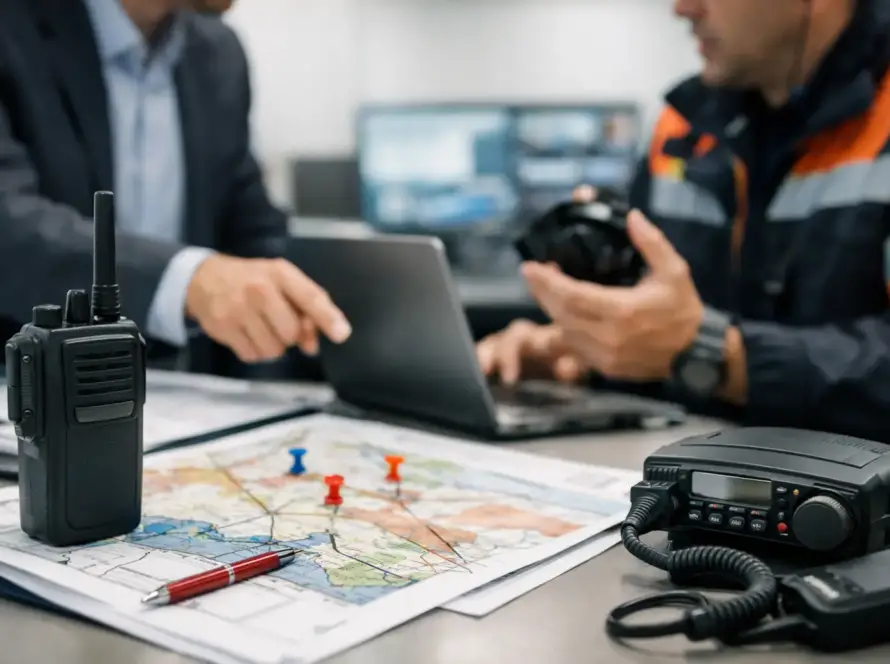
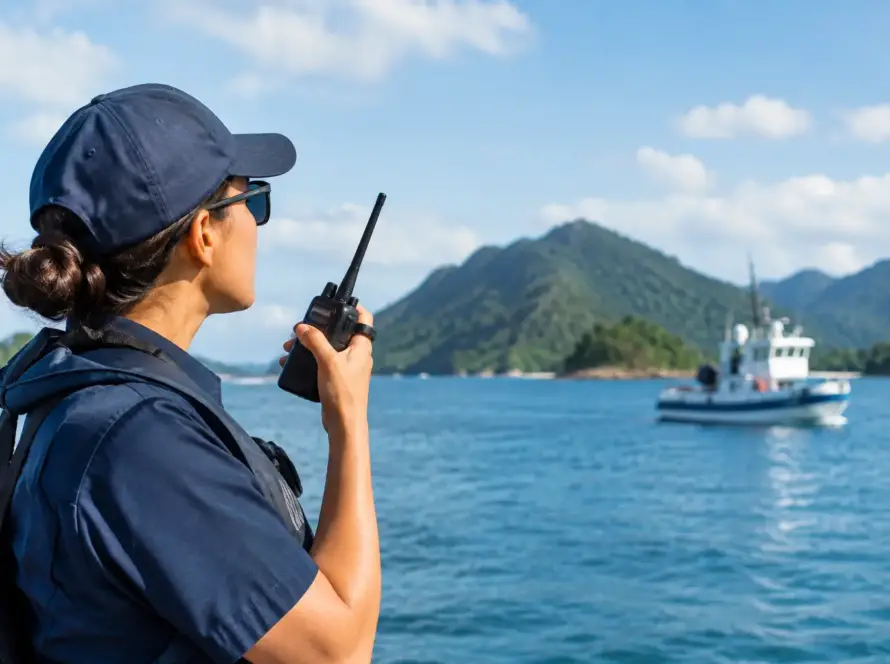
A supervisor on Saint Thomas needs to reach a driver on Saint Croix, a service crew at a remote site, and an office coordinator at the same time. Traditional two-way radio may cover part of that operation, but not always the full distance. The question, what is Hytera PoC, matters because it addresses that gap with familiar push-to-talk communication over cellular and Wi-Fi networks.
Hytera Push-to-Talk over Cellular, usually called Hytera PoC, combines the direct, fast communication style of a two-way radio with the broad reach of cellular data. Instead of relying only on a local radio repeater or radio-frequency coverage area, authorized users connect through 4G LTE, 5G, or Wi-Fi. A worker presses the push-to-talk button, speaks, and the message is delivered to an individual, a selected group, or an entire organization.
For organizations with personnel across islands, vehicles, facilities, ports, job sites, or public-facing locations, PoC can extend communications well beyond the limits of a conventional radio channel.
What Is Hytera PoC and How Does It Work?
Hytera PoC is a communication platform that runs on compatible Hytera PoC radios, smartphones, tablets, and dispatch applications. Each user signs in to a managed account and is assigned to one or more communication groups. Those groups can reflect the way an organization actually works: operations, maintenance, security, marine crew, supervisors, drivers, or emergency response personnel.
When a user presses the push-to-talk button, their voice is sent as encrypted data through the available cellular or Wi-Fi connection to the PoC service. The platform then routes it to the right users or group. To the person speaking, the experience remains simple: press, speak, release. There is no need to place a phone call, wait for someone to answer, or repeat the same update to several people.
The difference is coverage. A conventional radio system depends on radio infrastructure and the terrain around it. Hytera PoC uses the reach of data networks, which can support communications between teams separated by long distances, provided those users have an active data connection.
Why PoC Fits Distributed Operations
Fast voice communication has value when work is moving. A dispatcher may need to redirect a field technician. A marina manager may need to coordinate dock staff and a vessel crew. A facilities team may need to report an outage, request materials, or confirm that an area is clear. In each case, a group call can get the information to the right people at once.
For U.S. Virgin Islands organizations, the operational advantage often comes from connecting people across Saint Croix, Saint Thomas, and Saint John without treating each island as a separate radio coverage challenge. A properly planned PoC deployment can give managers visibility and communication continuity across dispersed personnel while preserving the practical radio-style workflow many crews already prefer.
PoC also makes it easier to add users as an operation grows. New employees can be assigned to existing groups, temporary teams can be created for a project or event, and supervisors can be given access to broader channels without giving every user the same level of access. This supports clearer communication discipline and reduces unnecessary traffic.
Key Hytera PoC Capabilities
The specific features available depend on the device, service configuration, and organizational requirements. Most Hytera PoC deployments are built around a set of practical operating tools:
- One-to-one and one-to-many push-to-talk calls for immediate coordination.
- User groups organized by department, location, role, or incident.
- GPS location services that can help dispatchers see equipped personnel or vehicles.
- Text messaging, status updates, and multimedia sharing when voice is not enough.
- Dispatch console access for supervisors who need to monitor activity and coordinate teams from a central location.
- Priority and emergency calling features for urgent situations.
These functions are useful because they keep communications in one managed environment. Rather than relying on informal phone calls, consumer messaging applications, and disconnected radio channels, an organization can establish defined groups, user permissions, and operational procedures.
Hytera PoC Versus Conventional Two-Way Radio
PoC is not a replacement for every radio system. It is a different tool, and the right choice depends on coverage, risk, infrastructure, and how teams work.
Conventional analog and DMR radio systems are highly effective for local communications, especially where an organization owns or manages its radio infrastructure. They can continue operating in places where cellular service is limited or unavailable. They are often the better fit for a contained campus, industrial facility, vessel operation, or remote area where dependable radio-frequency coverage has been engineered.
Hytera PoC is especially valuable when users must communicate across broad geographic areas or when building a wide-area radio network would be impractical. It can also support organizations with a mix of office staff, mobile workers, contractors, drivers, and supervisors who need to communicate from different device types.
The trade-off is straightforward: PoC depends on data connectivity. If cellular and Wi-Fi service are interrupted at a location, PoC performance may be affected. For high-consequence operations, a communications plan may use both PoC and conventional radio so personnel have an appropriate path for each operating condition.
Planning a PoC System for the USVI
A successful PoC deployment starts with the operation, not the device. Before selecting radios or creating talk groups, organizations should identify who needs to communicate, where they work, what information they need to share, and what must happen when coverage is limited.
Terrain, building construction, port environments, and varying cellular conditions can all affect real-world performance. A warehouse may have weak indoor coverage. A hillside worksite may behave differently from a coastal facility. A marine operation may need a separate communications approach once a vessel moves beyond practical cellular reach. Testing the actual work environment matters more than relying on a coverage map alone.
Device selection also deserves attention. Some teams need a purpose-built PoC radio with a large push-to-talk button, loud audio, long battery life, and accessories suited to field use. Other users may be better served by a PoC application on a managed smartphone. The right mix can reduce costs while ensuring personnel who work in demanding conditions have equipment that matches the job.
Cwave Communications, an authorized Hytera dealer, helps organizations evaluate PoC alongside DMR and analog radio options, with local service support for communication systems operating across the U.S. Virgin Islands.
Security, Administration, and Everyday Control
Communication systems should be managed with the same care as other business technology. A PoC platform can provide controlled user access, group assignments, device management, and centralized administration. This gives operations leaders more control than an unmanaged collection of personal mobile phones.
Good administration is not just an IT task. Supervisors should know which groups are active, who is responsible for updating users, how emergency calls are handled, and what the escalation process is during an incident. Clear naming conventions and talk-group rules prevent confusion when several departments share a platform.
Training is usually brief because push-to-talk is familiar to most field teams. Still, users should practice group selection, emergency procedures, location-sharing policies, charging routines, and radio etiquette. A well-configured system can still become difficult to use if every message goes to a single channel or users are not clear on who is monitoring each group.
Is Hytera PoC Right for Your Team?
Hytera PoC is a strong fit for teams that need immediate voice communication over a wide service area, especially when workers move between islands, facilities, vehicles, and job sites. It is also useful for organizations that want dispatch visibility, flexible user groups, and a practical way to connect radio users with smartphone-based personnel.
It may not be the only answer for isolated locations, offshore work, or sites where data coverage is uncertain. Those conditions call for a coverage assessment and, in many cases, a layered plan that includes conventional radio, satellite capability, or other backup communications.
The most useful next step is to map your real operating day: where your people work, who needs to reach whom, and what happens when normal communications are unavailable. That assessment will show whether Hytera PoC should be your primary coordination tool, a companion to existing radios, or part of a broader mission-ready communications plan.