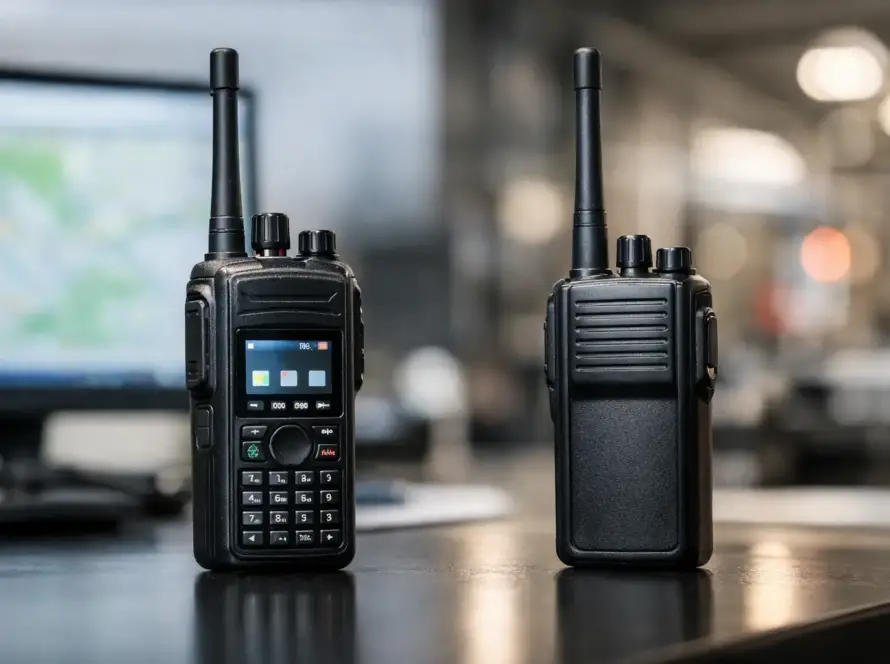
A charter captain usually notices radio quality before passengers notice anything at all. It shows up in the small moments – a bridge opening request that goes through cleanly, a marina call that does not need repeating, or a weather update heard clearly before the squall line gets close. When operators ask about the best marine radios for charter use, they are rarely asking for the loudest speaker or the biggest screen. They are asking what will hold up, stay clear, and support safe operations day after day.
For charter businesses, radio selection is an operations decision as much as a purchasing decision. The right setup supports crew coordination, passenger safety, marina communication, and emergency response. The wrong one creates frustration, missed calls, and avoidable downtime. That matters even more in island waters, where terrain, distance, marina traffic, and changing weather can all affect how well a system performs.
What makes the best marine radios for charter operations
A good charter radio has to do four things consistently. It needs dependable transmit and receive performance, clear audio in noisy conditions, controls that are easy to use under pressure, and durability that matches the marine environment. Salt, vibration, heat, and spray do not care how attractive the product sheet looked onshore.
Fixed-mount VHF radios usually lead the conversation because they remain the standard for vessel communications. They offer stronger output than handheld units, better antenna options, and a more permanent installation. For most charter boats, that makes a fixed-mount VHF the primary radio and a handheld VHF the backup, not the other way around.
Digital Selective Calling, or DSC, is another feature that moves from nice-to-have to necessary in charter service. When connected properly to GPS, DSC allows distress alerts with location data and supports direct vessel-to-vessel calling. That can save time when time matters. NOAA weather channels, strong ingress protection, and NMEA connectivity also deserve attention because they affect real-world use, not just convenience.
Fixed-mount vs handheld – which charter boats need both?
For most operators, the answer is yes. A fixed-mount VHF should carry the main communications load. It gives you better range, stronger signal performance, and easier integration with the rest of the vessel electronics. If your charter operation runs on a schedule, works busy marina zones, or spends time offshore, relying on handheld-only communications is usually too much compromise.
Handheld radios still play an important role. They are practical during boarding, docking, tender operations, and short-range crew coordination. They also provide resilience if the primary unit loses power or the vessel has an electrical issue. The trade-off is range, battery life, and often lower speaker output. On a windy day with engine noise in the background, those differences become obvious.
That is why the best setups are layered. Primary fixed-mount radio, quality antenna, properly installed power supply, and at least one charged handheld stored where crew can access it quickly.
1. Standard fixed-mount VHF with DSC
For many charter boats, this is the baseline recommendation. A modern fixed-mount VHF with DSC, GPS integration, weather alerts, and solid waterproofing covers the core mission well. It handles routine calls, hailing, weather monitoring, and emergency use without overcomplicating operations.
This category fits most nearshore charter vessels, fishing charters, snorkeling boats, and day excursion operators. If the vessel has one helm, a straightforward route structure, and predictable operating areas, a reliable standard VHF is often the right answer. It is also usually the best balance between cost and function.
2. Fixed-mount VHF with AIS receive capability
For busier waters or operators moving through commercial traffic areas, AIS receive can add useful situational awareness. It helps the helm identify nearby AIS-equipped vessels and reduce uncertainty in lower visibility or congested channels.
It is not a replacement for radar, attentive watchkeeping, or sound judgment. But for charter captains who regularly work around ferries, larger commercial vessels, or marina approaches with heavy movement, AIS on the radio can make communication and navigation decisions more informed. If your operation stays mostly in open recreational areas, it may be more feature than necessity.
3. Command-style fixed-mount VHF with remote mic support
Larger charter vessels or boats with more than one control position benefit from a radio that supports a second station or remote microphone. This matters when the person handling docking or vessel positioning is not standing directly at the primary helm.
On a smaller boat, this can feel excessive. On a catamaran, larger passenger vessel, or any charter platform where crew movement is part of normal operations, it can improve communication flow and reduce repeated instructions. Better control access often means fewer mistakes during the busiest phases of a trip.
4. Commercial-duty handheld VHF
A backup handheld should not be an afterthought. Charter crews need something with clear audio, dependable battery performance, and charging practices that actually fit daily turnover. A budget handheld that sits dead in a drawer is not a backup plan.
Commercial-duty handhelds are worth considering if your crew frequently leaves the helm area, works docks often, or manages boarding at multiple touchpoints. They tend to hold up better under repeated use and rough handling. The main compromise is cost, but reliability during real operations is usually worth more than the savings from replacing weaker units every season.
5. Intrinsically safe or specialized handhelds for certain charter profiles
Not every charter operation needs this, but some do. If your vessel works around fuel transfer zones, industrial waterfront areas, or specialized marine service environments, equipment requirements may be more specific. In those cases, radio selection should follow the operating environment rather than a generic boating checklist.
This is where a communications partner can add value. The best radio on paper may not be the best fit for the actual vessel, crew process, or compliance requirement.
Installation matters as much as the radio itself
A strong radio can perform poorly if the installation is weak. Antenna quality, cable condition, mounting location, power stability, and proper grounding all affect performance. Charter operators sometimes replace radios when the real problem is antenna degradation, poor connector integrity, or placement issues causing signal loss.
That is especially true in coastal and island environments where corrosion moves faster than many owners expect. A radio system should be treated as part of vessel infrastructure, not just electronics inventory. If communication quality has dropped over time, the issue may be the system around the radio rather than the unit alone.
For operators in the U.S. Virgin Islands, this point is practical, not theoretical. Vessel routes around Saint Thomas, Saint John, and Saint Croix can create changing line-of-sight conditions, marina congestion, and weather exposure that punish weak installations. A clean system design gives the equipment a fair chance to perform.
How to choose the best marine radios for charter fleets
Start with your operating pattern. A six-passenger inshore fishing charter, a multi-stop excursion boat, and a larger passenger vessel do not have the same radio needs. Range expectations, number of crew, helm layout, and docking routine all shape what makes sense.
Next, think about failure points. If the vessel loses main power, how will communications continue? If the helm is noisy, can the speaker still be heard clearly? If multiple crew members need access, can they communicate without crowding one control position? These questions usually reveal whether you need a simple fixed-mount solution or a more layered setup.
Serviceability should also be part of the decision. Charter operators need equipment that can be maintained, inspected, and replaced without long disruptions. That is one reason many businesses prefer working with a provider that understands both radio systems and the local operating environment. Cwave Communications, as an authorized Hytera dealer, approaches communications that way – as a long-term system that needs to stay ready, not just a box to install once.
Common mistakes charter operators make
The first is buying for occasional recreational use instead of daily commercial use. Charter boats put more hours, more stress, and more responsibility on communications equipment. Consumer-level assumptions often break down quickly.
The second is underestimating audio clarity. Range gets most of the attention, but muffled or weak audio causes just as many problems in real operations. A captain should not have to ask for every message twice.
The third is treating backup communications casually. Spare batteries, charged handhelds, updated MMSI information, and DSC setup are not minor details. They are part of readiness.
A radio system should feel boring in the best sense. It should work every time, sound clear, and stay out of the way of the job.
The right charter radio is not necessarily the most expensive one or the one with the longest feature list. It is the one that fits the vessel, supports the crew, and keeps communication steady when the day gets noisy, busy, or unpredictable. If you choose with operations in mind, the radio will earn its place long before anyone onboard thinks to ask what model it is.