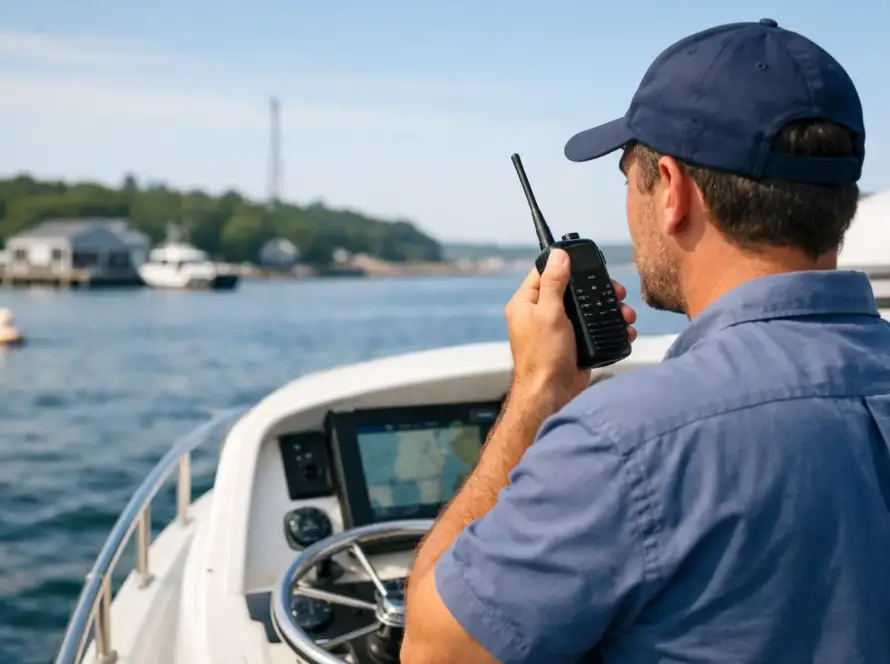
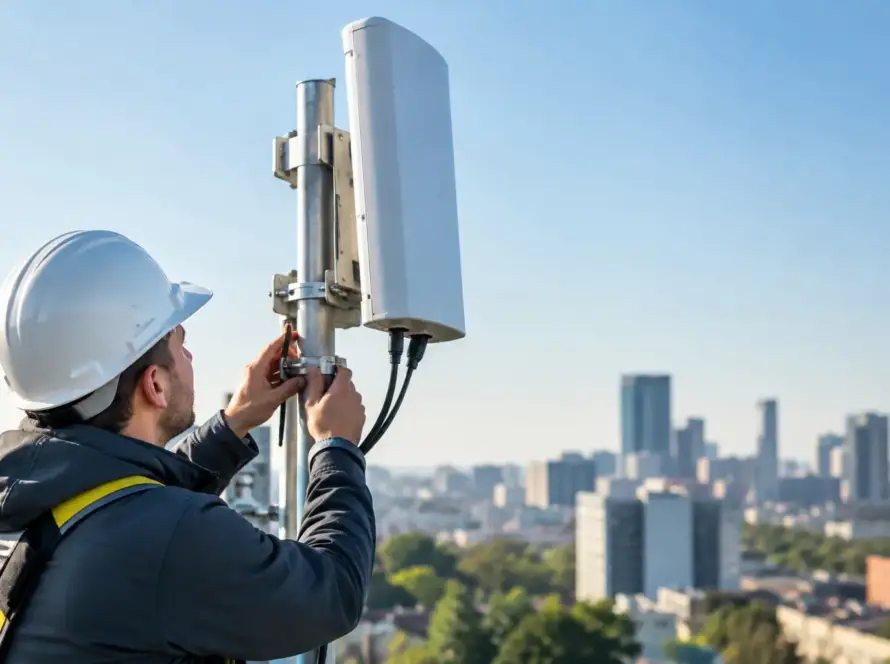
A radio that works at the dock but fails behind a concrete wall, across a hill, or during a power interruption is not a communications system. It is a coverage gap waiting to affect safety, service, and operations. This commercial radio system guide is built for organizations that need dependable communications across real working conditions, not just a good signal in a showroom.
For businesses and agencies in the U.S. Virgin Islands, radio planning has to account for terrain, buildings, weather exposure, marine environments, inter-island operations, and the practical realities of supporting teams in the field. The right system starts with operational requirements and ends with ongoing service, testing, and accountability.
Start With the Work Your Teams Must Do
The first question is not which radio model to buy. It is what communication failure would cost your operation. A property management team may need immediate coordination between maintenance, security, and supervisors. A marine operator may need reliable communications from shore facilities to vessels and across waterfront work areas. A public works or utility team may need group calls, emergency alerts, and coverage that remains available during demanding conditions.
Define who needs to talk, where they work, and how quickly information must move. Consider routine communications, urgent calls, lone-worker situations, dispatch needs, and communication between separate departments. A system designed only for normal daily traffic can become congested or confusing when an incident occurs.
It also helps to identify whether every user needs the same device and access level. A field technician, dispatcher, supervisor, and visiting contractor may all require different features. Assigning roles early prevents unnecessary spending while ensuring critical users have the tools and permissions they need.
Commercial Radio System Guide: Choose the Right Technology
Commercial radio systems generally fall into three practical categories: analog two-way radio, digital mobile radio, and push-to-talk over cellular. Each can be the right choice, depending on the operating environment.
Analog radio for straightforward local communications
Analog radio remains useful for simple, local voice communications and for organizations maintaining compatibility with existing equipment. It can be cost-effective when coverage needs are limited and advanced features are not required. The trade-off is that analog systems provide less efficient use of channels and fewer capabilities for user management, messaging, location services, and call prioritization.
Analog may be a sensible fit for a small facility, a short-term project, or a team that needs uncomplicated on-site coordination. It is less suitable when an organization needs to scale coverage, connect multiple sites, or manage a larger number of users with clear operational controls.
DMR for controlled, private radio coverage
Digital Mobile Radio, commonly called DMR, is a strong option for organizations that need dependable voice quality, efficient channel use, and professional system management. DMR can support individual, group, and emergency calling while offering features such as text messaging, radio check, GPS location, and dispatch integration when properly configured.
A DMR system can be designed around repeaters, antennas, licensed frequencies, and coverage objectives specific to the customer’s facilities and service area. This gives an organization direct control over its radio environment. The trade-off is that a private DMR system requires thoughtful engineering, site preparation, licensing, installation, and maintenance. It is not simply a box of radios handed out to employees.
Push-to-talk over cellular for wide-area operations
Push-to-talk over cellular, or PoC, uses cellular and Wi-Fi networks to extend communications well beyond the range of a conventional local radio system. For organizations with personnel moving between Saint Thomas, Saint John, Saint Croix, mainland locations, or other connected areas, PoC can provide a practical wide-area communications option.
PoC is particularly useful for distributed fleets, supervisors traveling between sites, and organizations that want voice, location, messaging, and dispatch functions through a connected platform. Its primary consideration is network availability. Cellular service can be excellent in many locations, but coverage should be verified where teams actually work, including ports, interior buildings, remote roads, and waterfront areas.
Many organizations benefit from a mixed approach. For example, a facility may use DMR for dependable local coverage and PoC for management, logistics, or personnel operating across multiple islands. The best design follows the work, not a one-size-fits-all product category.
Treat Coverage as an Engineering Requirement
Coverage is often misunderstood as a simple question: “Can we talk from point A to point B?” A better question is whether users can communicate clearly and consistently at the locations where they perform their duties. That includes loading areas, mechanical rooms, stairwells, parking structures, marinas, vessels, storage yards, hilltop sites, and indoor workspaces.
Radio frequency performance is affected by elevation, vegetation, concrete, metal structures, roofing materials, antenna placement, and distance. On island terrain, a short geographic distance does not always mean an easy radio path. Hills, ridges, and building density can create dead zones that only become visible during a proper survey.
A professional site assessment should account for at least these four factors:
- The required coverage area, including indoor and outdoor work zones
- The number of users, talk groups, and expected call traffic
- The condition and availability of power, network connectivity, and equipment locations
- Environmental exposure, including salt air, heat, rain, and vibration
Coverage testing should be documented before final acceptance. If a location is critical to operations, it should be tested as a critical location, not assumed to work because the system performs well nearby.
Design for Dispatch, Safety, and Daily Discipline
A commercial radio system should make work easier under pressure. Clear talk-group design is a major part of that. Teams need to know which channel to use, who is responsible for monitoring it, and how to reach help without searching through a long list of options.
Separate routine traffic from urgent or emergency traffic when operationally appropriate. Maintenance teams may need their own work group, while security, dispatch, supervisors, and management require defined access to broader coordination channels. Too many groups can confuse users; too few can create unnecessary noise and missed messages. The right balance depends on the size and structure of the organization.
Safety features deserve the same planning. Emergency buttons, lone-worker functions, man-down alerts, GPS location, and call priority can be valuable, but only if teams understand the response process. An emergency alert with no defined monitoring procedure is not a complete safety program.
Training should cover more than turning the radio on. Users should learn call etiquette, radio checks, battery care, emergency procedures, and when to move sensitive or detailed conversations to a private call. Supervisors and dispatch personnel need additional training on user management, escalation, and incident documentation.
Plan for the Full Lifecycle, Not Just Installation
Commercial communications systems are infrastructure. Like any critical infrastructure, they need support after deployment. Batteries wear down, antennas are damaged, firmware needs review, user assignments change, and coverage requirements evolve as facilities or operations grow.
A lifecycle plan should include preventive maintenance, repair procedures, spare equipment, programming control, and periodic performance checks. For marine and coastal operations, inspections matter even more because salt air and moisture can affect connectors, antennas, charging equipment, and portable radio accessories over time.
Organizations should also establish ownership for system administration. Someone needs to control radio IDs, talk-group access, replacement units, lost-device procedures, and configuration changes. Without that discipline, a well-designed system can gradually become difficult to manage.
Cwave Communications, an authorized Hytera Dealer, supports organizations with system consulting, deployment, repair, maintenance, and communications solutions designed for the operating conditions found across the U.S. Virgin Islands. Local support is especially valuable when a communications issue affects active field operations and cannot wait for distant service coordination.
Questions to Ask Before You Commit
Before selecting equipment or approving a proposal, ask how coverage will be verified, what happens if a repeater or network connection fails, and who will provide service after installation. Ask whether the system can expand with additional users, sites, or dispatch needs. Confirm which features are included today and which require separate licensing, connectivity, or infrastructure.
It is also wise to ask about environmental ratings, accessory compatibility, battery replacement cycles, and the expected process for adding or removing users. These details shape the true cost and reliability of the system over its service life.
A dependable radio system is built around the places your people work, the decisions they must make, and the support they need when conditions are less than ideal. Start with a field assessment and an honest operating plan, and the technology can serve the mission instead of becoming another system your team has to work around.