A radio failure near fuel transfer equipment, solvent storage, combustible dust, or gas vapor is not a minor inconvenience. It is a safety exposure. This Hytera intrinsically safe radio review focuses on what operational leaders should evaluate before putting radios into hazardous-area service: certification fit, day-to-day usability, coverage, accessories, and the support required to keep the system compliant over time.
For teams in maritime, utilities, facilities, logistics, construction, and public-sector operations, the right answer is rarely just “buy an intrinsically safe radio.” The radio, battery, charger, audio accessory, coverage design, and work procedures all have to match the hazard and the job.
What Intrinsically Safe Means in Practice
An intrinsically safe, or IS, radio is designed so it does not release enough electrical or thermal energy to ignite a specified hazardous atmosphere under defined fault conditions. That definition matters because it is not a blanket guarantee for every hazardous location.
Before selecting a radio, the organization must identify the classification of the area where it will be used. In the United States, that can involve Class/Division or Zone designations, as well as the type of hazard present, such as flammable gas, vapor, or combustible dust. The required protection level can also vary by location within the same facility. A dockside fueling point, a machinery space, and an administrative office may have very different requirements.
Hytera offers intrinsically safe versions of selected professional radios, but buyers should verify the exact certification marking on the specific model and variant being purchased. A similar-looking radio may not carry the same approval. Certifications, permitted temperature ranges, battery types, and approved accessory combinations must be confirmed against the site’s safety requirements.
The practical takeaway is straightforward: intrinsically safe is a documented system specification, not a feature to assume from a product family name.
Hytera Intrinsically Safe Radio Review: Strengths That Matter
Hytera’s IS radio options are built around the core needs of professional two-way communications: clear audio, reliable PTT operation, durable controls, and compatibility with organized radio systems. For a working crew, those fundamentals are often more valuable than a long list of secondary features.
Audio and controls support real field work
Hazardous environments are often loud. Pumps, engines, wind, rain, generators, forklifts, and vessel operations can make ordinary handheld communication difficult. A suitable Hytera IS radio should be evaluated for speaker output, voice clarity, microphone performance, and accessory options while personnel are wearing the actual PPE required for the job.
Large controls and a distinct push-to-talk button also matter. A radio that is easy to operate with gloves, wet hands, or limited visibility reduces unnecessary radio traffic and lowers the chance that a worker delays a safety call. The best radio interface is usually the one a crew can operate correctly without stopping to look at it.
DMR can improve channel efficiency and supervision
Where a digital mobile radio system is appropriate, Hytera DMR capabilities can provide clearer voice performance at the edge of usable coverage and more efficient use of licensed spectrum than a conventional analog-only setup. Features such as individual calling, group calling, text messaging, dispatch functions, and GPS may also help supervisors coordinate field personnel.
That said, digital is not automatically better in every deployment. Teams with a simple local work area and existing analog infrastructure may prioritize compatibility and straightforward operation. A mixed-mode transition can be useful, but it should be designed carefully so workers are not managing inconsistent channel plans or unclear calling procedures.
Build quality is only part of the durability equation
Professional IS radios are intended for demanding use, but hazardous-area certification and environmental durability are different measurements. A radio may have strong resistance to water and dust while still requiring specific inspection and handling procedures to preserve its safety approval.
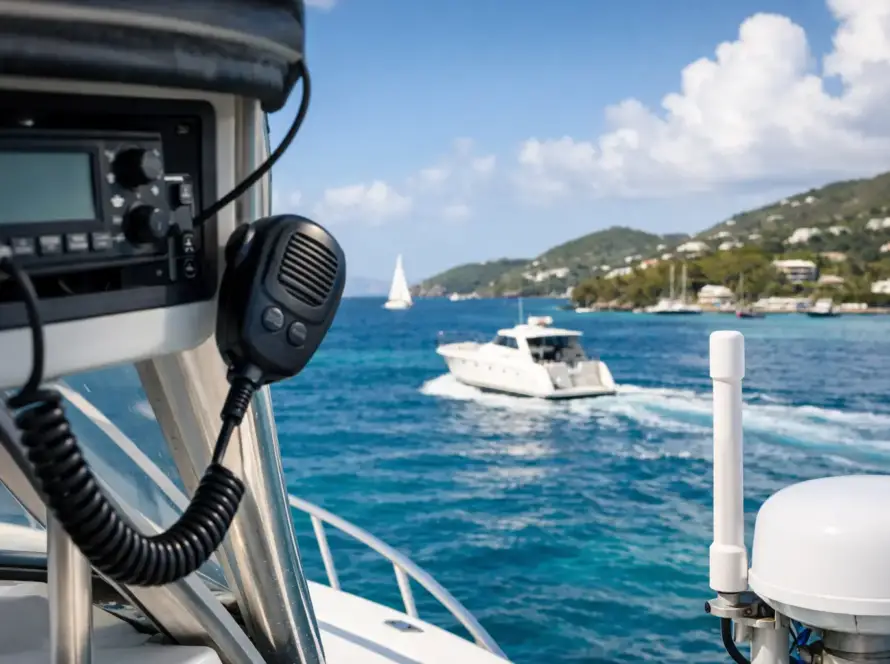
For coastal operations, salt exposure deserves special attention. Equipment used around Saint Thomas, Saint John, or Saint Croix may face humidity, salt spray, sudden rain, and storage conditions that accelerate corrosion. Regular cleaning, inspection of battery contacts and seals, and proper charging practices can have as much effect on service life as the original equipment choice.
The Trade-Offs: Cost, Weight, and Accessory Control
Intrinsically safe radios cost more than standard commercial handhelds, and that price difference is justified by specialized design, testing, certification, and controlled components. They can also be heavier, particularly with approved high-capacity batteries. For long shifts, that affects how the radio is carried and whether a worker will keep it properly secured.
The biggest operational trade-off is accessory control. In an IS deployment, organizations cannot treat batteries, chargers, speaker microphones, earpieces, and replacement parts as interchangeable. Using an unapproved accessory can compromise the certified configuration, even when the connector fits and the radio appears to work normally.
This is where purchasing discipline matters. Maintain an approved-equipment list, label chargers and accessories clearly, and train supervisors to remove damaged equipment from service. A low-cost substitute purchased to solve an immediate problem can create a larger safety and compliance issue.
Coverage Is a Safety Requirement, Not a Radio Specification
A capable handheld cannot overcome poor RF coverage. Metal structures, concrete, tank farms, vessel compartments, hillsides, and island terrain can all create weak-signal areas. In an emergency, those are often the exact places where a crew needs to communicate.
A proper evaluation should include a site survey and field testing in the locations where personnel actually work. Test radio-to-radio communication, calls to a control point, emergency button procedures where applicable, and performance around machinery or inside structures. Do not base a deployment solely on a coverage estimate from an office map.
For geographically distributed operations, the system design may include repeaters, linked sites, dispatch consoles, or cellular-based communications for personnel working beyond radio coverage. Each approach has advantages. Conventional radio can provide immediate local communications with minimal dependence on public networks, while push-to-talk over cellular can extend reach where carrier coverage is dependable. The right architecture depends on the hazard area, terrain, operational footprint, and continuity requirements.
Questions to Settle Before Deployment
Before choosing a Hytera IS radio configuration, operations and safety leaders should resolve four questions:
- What hazardous-area classification applies at every location where personnel will transmit, charge, store, or use the equipment?
- Which exact radio, battery, charger, and audio accessories are approved for that classification?
- What coverage standard must the communications system meet, including indoor, dockside, vessel, and remote-work areas?
- Who will inspect, program, repair, document, and replace equipment throughout its service life?
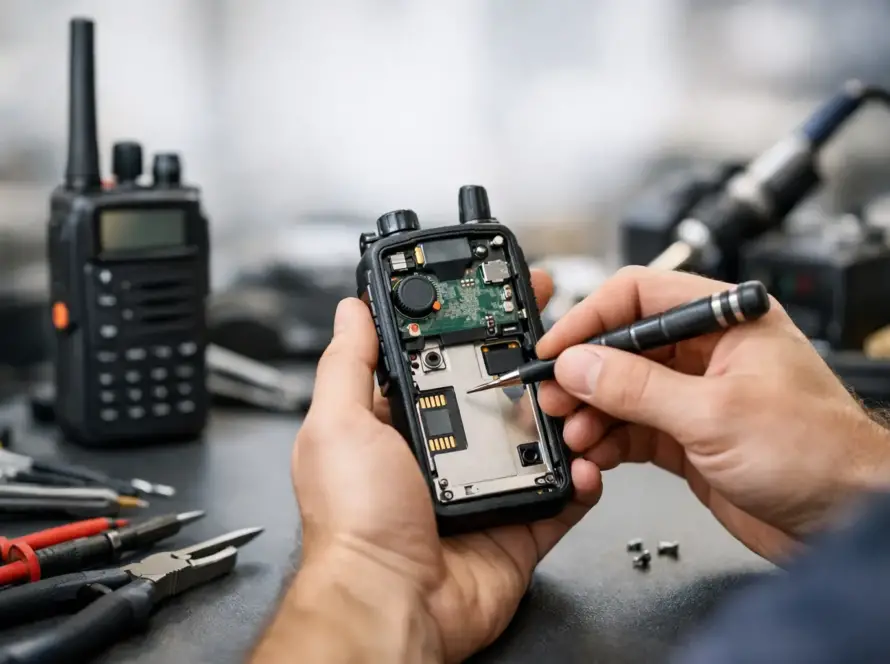
These questions prevent a common mistake: specifying the right handheld but overlooking the environment around it. Charging may need to occur outside classified areas. Spare batteries may need controlled storage. Programming changes must preserve the agreed channel plan and emergency procedures. Repairs should be handled by technicians who understand both the equipment and the certification constraints.
A Better Way to Evaluate the Radio
A field trial should be structured around actual workflows rather than a brief demonstration. Have crews use the radio during normal shifts, at noisy work points, during vehicle movement, in rain if conditions permit, and while wearing required PPE. Test battery endurance against the longest real shift, including heavy transmit periods. Confirm that personnel can hear and respond to calls without removing protective equipment.
Document what happens when a radio is dropped, when an accessory cable catches on clothing, when a battery is changed, and when a worker moves from a hazardous area into a general work area. These are ordinary moments, but they reveal whether the configuration is practical enough to stay compliant.
Cwave Communications, an authorized Hytera dealer, can help USVI organizations align equipment selection with coverage planning, programming, maintenance, and lifecycle support. That local technical support is particularly valuable when communications must perform across marine environments, variable terrain, and dispersed worksites.
A Hytera intrinsically safe radio can be a strong operational choice when its certification matches the hazard, its audio and controls fit the crew, and the radio system is engineered for the places people actually work. Start with the site classification and communication workflow, then choose the equipment that keeps workers connected without asking them to compromise safety for convenience.