A radio system can be perfectly installed and still create an operational problem if the frequencies were not properly authorized. Saint Thomas radio licensing is not merely an equipment purchase step. It determines whether a business, vessel operator, property team, or public-facing organization can communicate legally, avoid interference, and expand its coverage with confidence.
In the U.S. Virgin Islands, most radio licensing is governed by the Federal Communications Commission. The right licensing path depends on how radios will be used, where they will operate, whether they communicate with a repeater, and whether communications cross into maritime or international operating environments. Planning these details early protects uptime and prevents expensive rework later.
When Saint Thomas Radio Licensing Is Required
Most business two-way radio systems operating on assigned land mobile frequencies require an FCC license. This commonly includes radios used by security teams, resorts, construction crews, utilities, transportation providers, facilities personnel, event operations, and distributed field teams. The license authorizes the organization to use specific frequencies within a defined service area under stated operating conditions.
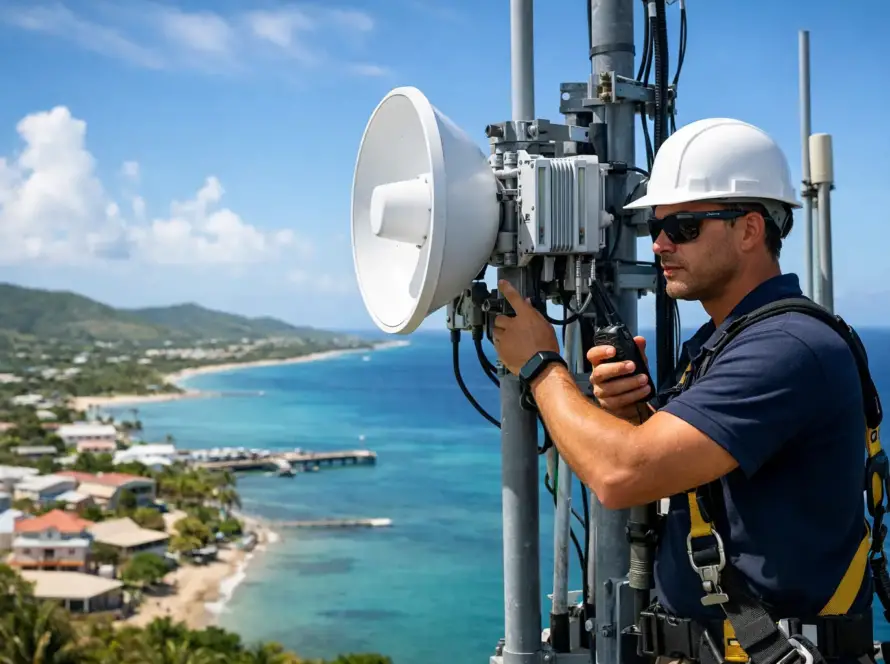
A license is especially relevant when an organization uses conventional analog or DMR radios on VHF or UHF business frequencies, installs a repeater, or needs a dedicated channel for private operations. A repeater increases usable coverage across difficult terrain and built-up areas, but it also adds technical and coordination requirements. It should never be installed simply by selecting an available-looking frequency from a radio programming menu.
License-free radio services can be appropriate for limited, low-power use. However, they are shared services, which means no organization has exclusive control over the channel. For a team that relies on clear communications during guest service, safety response, fleet movements, or daily operations, shared channels can introduce avoidable uncertainty.
The practical question is not just, “Can these radios talk to each other?” It is, “Can this system provide dependable, authorized coverage when our people need it?”
FCC Licensing Is About More Than Paperwork
An FCC authorization connects an organization to a specific frequency assignment, operational location, equipment category, and technical parameters. Those details matter because radio spectrum is a finite shared resource. Proper licensing helps reduce the likelihood that one user disrupts another, particularly in a compact island environment where elevated sites and open-water paths can extend radio signals farther than expected.
Frequency coordination is often part of the process for business land mobile systems. A certified frequency coordinator evaluates available spectrum and recommends a channel assignment that is intended to limit interference with existing users. This assessment is not a guarantee that every signal issue disappears, but it is a critical first layer of responsible system design.
An application also needs accurate technical information. That may include antenna height, transmitter power, repeater location, emission designators, and the geographic area of operation. Inaccurate details can delay an application or leave the eventual system out of alignment with the authorization.
For organizations operating between Saint Thomas, Saint John, and Saint Croix, coverage planning deserves additional attention. Island-to-island communication may be possible from some locations, yet signal performance can vary sharply based on terrain, building materials, antenna placement, weather conditions, and the radio band selected. A license should support the actual operational footprint, not an assumption based on a map.
Licensing Does Not Replace Coverage Design
A licensed frequency is not the same thing as reliable coverage. A radio may be authorized to operate in an area yet still struggle inside concrete buildings, behind hills, on lower decks, or in remote work zones. Conversely, an improperly planned high-site installation can create more coverage than intended and raise interference concerns.
A sound deployment evaluates both regulatory compliance and radio-frequency performance. Site surveys, propagation expectations, antenna selection, power settings, and repeater placement all affect the final result. For larger properties, ports, fleets, or multi-site operations, this work should happen before equipment is ordered in volume.
Business Radio, Maritime Radio, and Cellular PTT Follow Different Paths
Not every communications tool uses the same authorization model. Understanding the category helps prevent a business from applying the wrong rules to the wrong system.
Traditional business radios using dedicated VHF or UHF frequencies typically fall under FCC land mobile licensing requirements. This is the common model for organizations seeking local control, direct radio-to-radio capability, and private repeater coverage.
Maritime radio use is different. Vessels may use VHF marine radios for bridge-to-bridge safety, port operations, and distress communications. Certain vessels and operating circumstances require an FCC ship station license, while others may be exempt when operating domestically and carrying only specific equipment. International travel, satellite equipment, higher-power installations, or certain vessel classes can change the requirement. A marine radio should be configured and used according to maritime rules, not repurposed as a general business dispatch channel.
Push-to-Talk over Cellular, often called PoC, uses commercial cellular and data networks rather than a customer-held land mobile frequency. It can provide wide-area communications without a conventional FCC frequency license for the user’s talk group. That does not mean it is automatically the right replacement for radio. PoC depends on available network coverage and data service, while conventional radio can remain useful where direct local communications, independent on-site coverage, or fast group calling are essential.
Many organizations benefit from a mixed approach. A resort may use DMR radios for property operations and PoC for supervisors traveling between islands. A maritime operator may need marine VHF for vessel communications while using a separate business system for shore-side dispatch. The right answer depends on the job, the coverage environment, and the consequence of a missed call.
What to Prepare Before Applying
The licensing process moves more efficiently when operations leaders define their real requirements before selecting channels or radios. Start with the number of users, the areas they need to cover, the types of buildings or terrain involved, and whether communications must extend beyond Saint Thomas.
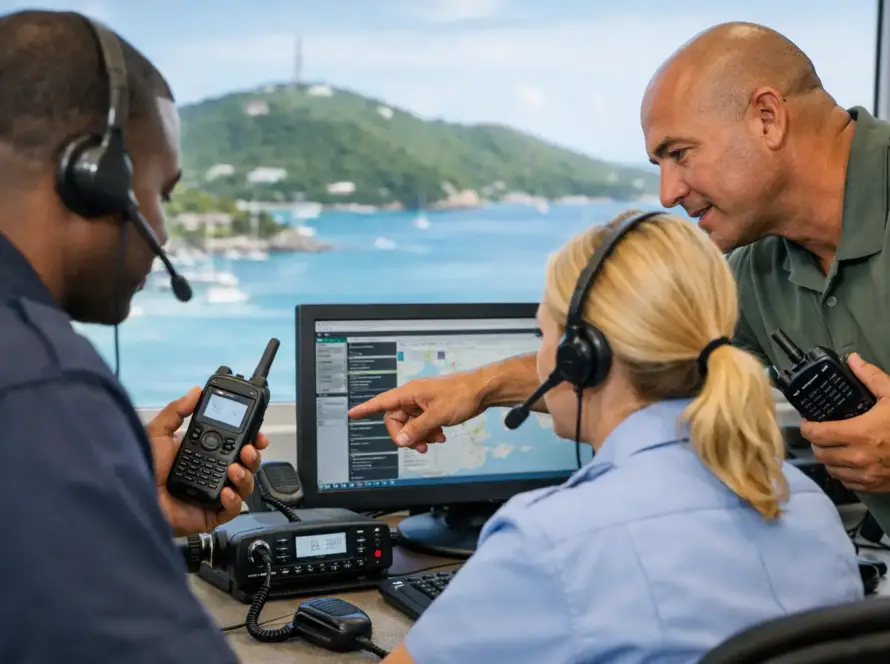
Also identify whether users need direct radio-to-radio calling, a fixed repeater, dispatch functionality, emergency alerting, encryption, or integration with a broader communications network. These choices influence the technical design and, in some cases, the application details.
Before submitting an FCC application, an organization should have clear answers to four operational questions:
- Who will use the radios, and what work must they support?
- Where must communications work reliably, including indoor, waterfront, and remote areas?
- Will the system use a repeater, rooftop antenna, tower site, or shared infrastructure?
- Is the goal local on-site coverage, island-wide reach, or communications across multiple islands?
This preparation reduces the risk of licensing a system that meets a narrow initial need but cannot support growth, new facilities, or additional teams.
Avoid These Common Licensing Mistakes
One common mistake is buying radios programmed with frequencies that the purchaser does not hold authority to use. A radio can contain hundreds of channels, but that does not grant permission to transmit on them. Another is copying an existing channel plan from a former employer, neighboring business, or online programming file. Frequency assignments are not transferable by informal agreement.
Organizations also run into trouble when a system changes but the license record does not. Moving a repeater, changing antenna height, expanding to a new operating area, or modifying technical parameters may require an update. Licenses also have renewal cycles. Letting an authorization lapse can create a preventable disruption, particularly when a business relies on the system every day.
Finally, do not treat radio licensing as a one-time administrative event. Equipment, sites, staffing patterns, and service areas change. Reviewing the license alongside the communications system keeps operations aligned with both regulations and real-world needs.
Build a System That Can Be Supported
The strongest radio programs pair authorized spectrum with equipment that fits the environment and a service plan that keeps the system working. Salt air, heat, heavy rain, rooftop exposure, and constant field use can affect antennas, connectors, batteries, and portable radios. Maintenance is not separate from communications readiness.
Cwave Communications can help organizations evaluate system requirements, coordinate practical radio design, and support licensed Hytera DMR, analog, and PoC communications across the U.S. Virgin Islands. The objective is not to add complexity. It is to establish a communications system that is legal, usable, and maintainable over time.
Before committing to radios or a repeater site, document the calls your team cannot afford to miss. That operational picture is the best starting point for a licensing plan that supports dependable communication when conditions are less than ideal.