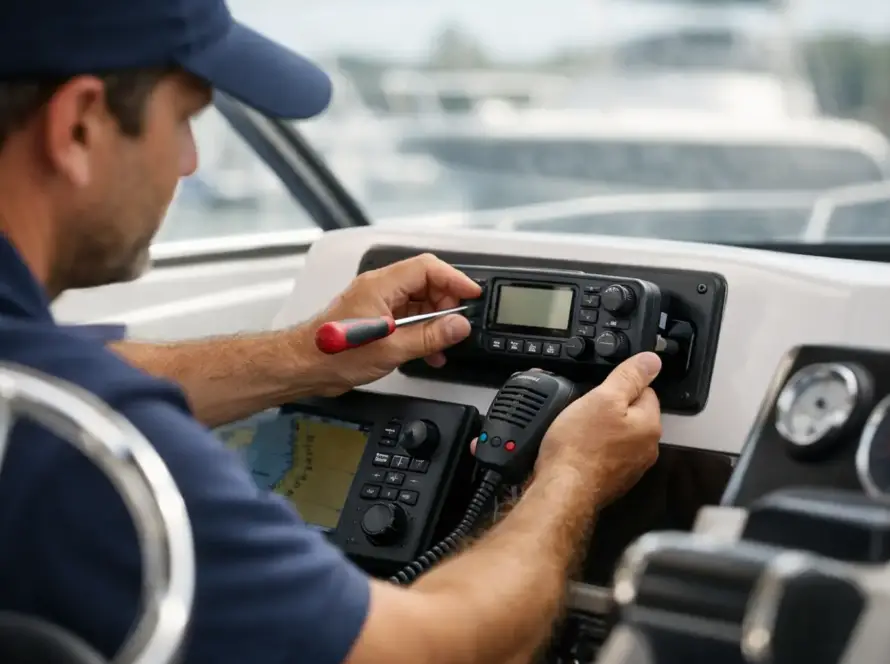
A dispatch supervisor on St. Thomas cannot wait for a carrier outage to discover that a field crew has no alternate way to report a safety issue. A marina cannot afford to lose contact with vessels because a single internet connection went down. Communications redundancy planning turns those avoidable single points of failure into defined, tested alternatives that keep people coordinated when normal systems are unavailable.
For organizations in the U.S. Virgin Islands, redundancy is not simply buying extra radios or adding a second phone line. It is a practical design discipline: identify how work gets done, determine what can fail, and build communication paths that match the operational consequence of an outage. The right plan differs for a property management team, a port operation, a utility contractor, and a public-sector department. The common goal is clear – preserve command, safety, and essential coordination under difficult conditions.
Start With the Communications That Cannot Stop
Not every conversation deserves the same level of protection. The first task is to separate mission-critical communications from messages that can wait. Emergency response, worker safety, vessel coordination, security incidents, utility restoration, and operational dispatch commonly belong in the highest-priority category. Routine administrative updates may not.
This distinction prevents overbuilding. A small organization may need a dependable primary radio system and a simple cellular backup procedure. A distributed operation with personnel on St. Croix, St. Thomas, and St. John may require multiple layers, including local radio coverage, cellular-based push-to-talk, backup power, and defined escalation procedures.
Ask operational leaders direct questions: Who must communicate during an outage? What information must be exchanged? How long can communications be interrupted before safety, service delivery, or revenue is affected? Answers should be specific. “Stay connected” is a goal, but “dispatch can reach every field unit within 60 seconds during a power or carrier disruption” is a design requirement.
Find the Single Points of Failure
A communications system can appear dependable until one overlooked dependency fails. The radio may work, but the repeater site loses power. Push-to-talk over cellular may be available, but the local carrier is congested. A dispatch application may be functional, but staff cannot reach it after a router or internet circuit fails.
Map the complete path for each critical communication. Include user devices, charging methods, repeaters or base stations, antennas, network equipment, internet providers, cellular coverage, dispatch consoles, power sources, and the people responsible for operating the system. This exercise often reveals that several “separate” tools depend on the same commercial power feed, building, carrier, or network connection.
Island operations deserve particular attention to physical and environmental dependencies. Severe weather, utility interruptions, salt exposure, terrain, and distance between work sites can affect equipment and coverage in ways that an office-based plan may miss. A backup located in the same room, on the same power source, or connected to the same carrier is not meaningful redundancy.
Build Independent Communication Layers
Effective communications redundancy planning uses layers with different failure modes. The objective is not to make every tool do everything. It is to ensure that a failure in one layer does not remove every way to coordinate.
For many organizations, two-way radio remains the primary field communications layer because it supports direct, immediate group communication without requiring each user to place an individual call. Digital Mobile Radio systems can provide organized talk groups, clearer coverage planning, and features suited to teams that need controlled communication across facilities or work areas. Analog radio can also remain appropriate for smaller fleets, established systems, or straightforward local operations.
Push-to-talk over cellular adds a valuable second path when teams operate beyond local radio coverage or across separate islands. It can extend group communication through available cellular or Wi-Fi networks and can be useful for supervisors, traveling personnel, and distributed operations. However, it should not be treated as a substitute for local radio where cellular availability is inconsistent or where immediate on-site coordination is essential.
A well-designed plan may combine local radio for on-property or nearshore work, push-to-talk over cellular for island-to-island coordination, and satellite capability or alternate network connectivity for key sites that need another route during major disruptions. The appropriate mix depends on coverage requirements, budget, operating environment, and the consequences of downtime.
Redundancy Must Include Power
Communications equipment is only useful while it has power. Backup power should cover more than a central radio site. Consider radios and spare batteries, chargers, network switches, routers, dispatch workstations, base stations, and any equipment supporting a repeater or antenna system.
Battery runtime must be based on the actual outage objective. A backup battery designed for a brief interruption may not support a full day of field operations. Generators can extend operating time, but they introduce fuel, maintenance, startup, ventilation, and testing requirements. The plan should document who checks the equipment, who authorizes generator use, and how personnel communicate if a site must be operated manually.
Portable radios need their own continuity plan. Maintain charged spare batteries, clearly label assigned equipment, and establish a rotation schedule so backup batteries do not sit unused until they have degraded. For teams with long shifts, vehicle chargers and charging locations outside a single facility can add practical resilience.
Design for Coverage, Not Assumptions
A backup channel is not a backup if users cannot reach it from the places where they work. Coverage testing should include docks, parking areas, mechanical rooms, remote work sites, elevated terrain, road corridors, and interior locations where construction materials affect signal performance.
Test primary and alternate paths separately. A team may have excellent radio coverage but poor cellular service at a particular site, or reliable cellular service but weak radio coverage behind a ridge or inside a reinforced building. Document these limits and give staff clear direction on what to use in each area.
This is where local system design matters. Cwave Communications, an authorized Hytera Dealer, can help organizations evaluate radio, PoC, network, and backup options against actual island operating conditions rather than relying on a generic coverage assumption.
Make the Backup Simple Enough to Use Under Pressure
Technical redundancy fails when users do not know which option to use, which channel to select, or who has authority to change operating procedures. A backup plan should fit on a clear, accessible operating guide. It should state the primary communication method, the first alternate method, the second alternate method, emergency talk groups or channels, call signs or contact roles, and the process for reporting a system failure.
Avoid giving every employee a complicated decision tree. In a fast-moving incident, people need simple direction. For example: use the assigned radio talk group first; if the system is unavailable, use the designated PoC group; if both are unavailable, report to the supervisor through the published phone and check-in procedure. The exact sequence will vary, but it must be known before the outage occurs.
Roles matter as much as equipment. Assign someone to monitor system status, someone to coordinate field check-ins, and someone to contact service support or vendors when a fault occurs. For larger operations, establish an incident communications lead who can move teams to alternate channels and maintain an activity log.
Test the Plan on an Ordinary Day
A redundancy plan that has never been tested is only a set of assumptions. Schedule practical tests that simulate real failures: loss of commercial power, loss of internet connectivity, an unavailable cellular carrier, a down repeater, or a dispatch console outage. Start with controlled exercises, then use the findings to improve the system and procedures.
Measure results. How long did it take to move to the alternate path? Did every team member receive the instruction? Could dispatch confirm the status of every field unit? Did backup power last as expected? Were spare batteries available and charged? These details expose the difference between having backup equipment and being ready to use it.
Testing also identifies trade-offs. A satellite option may provide valuable independence but require clear installation, access, and operating procedures. A second carrier may reduce exposure to one outage but not solve a facility-wide power loss. Additional radio repeaters can improve coverage but require ongoing maintenance, site protection, and licensing considerations. Good planning makes these trade-offs visible before they become an emergency expense.
Maintain the System Between Emergencies
Redundancy is a lifecycle commitment. Batteries age, antenna connections corrode, software changes, staff turnover occurs, and operational footprints expand. Review the plan after significant weather events, facility changes, fleet growth, major staffing changes, or any communications incident.
Maintenance should include radio inspections, battery checks, repeater and antenna evaluation, network monitoring, firmware and application review where applicable, and verification that current contact lists and talk-group assignments are available. Keep documentation controlled and accessible in both digital and printed forms when feasible.
The strongest communications plan is one that people trust because they have used it, tested it, and seen it perform. Build alternate paths around the work your teams actually do, then keep those paths maintained and familiar. When normal service is interrupted, that preparation gives your people a clear next step instead of a communications gap.