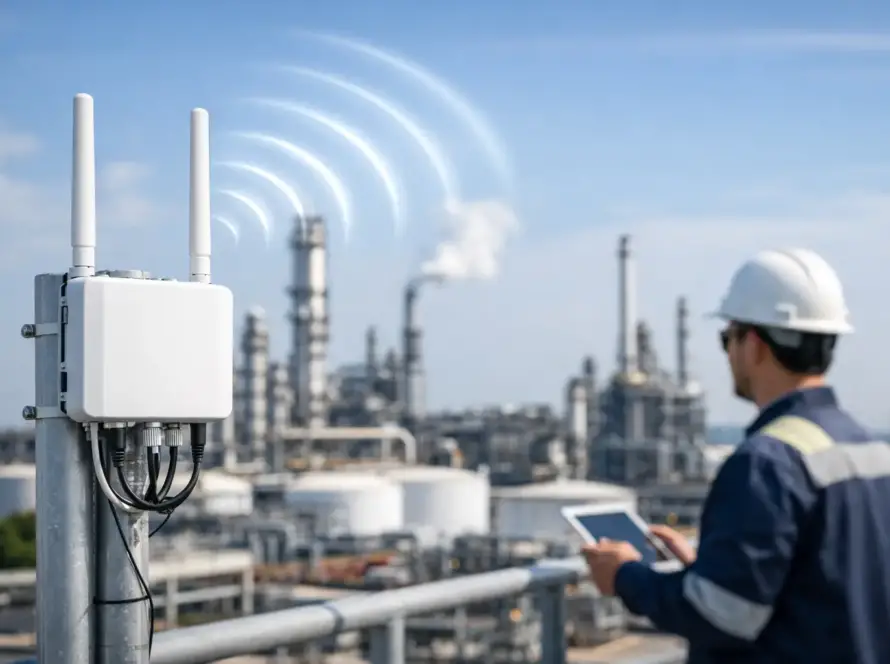
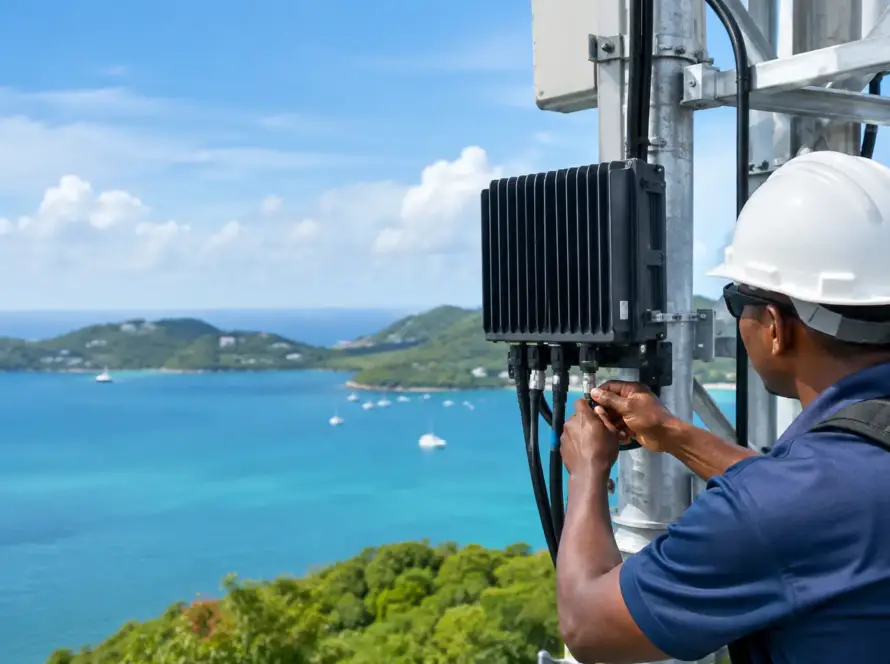
A crew leaves the dock, a facilities team moves behind a concrete structure, or a vehicle rounds a hillside road – and a radio that worked clearly moments ago becomes weak, noisy, or silent. When teams ask, “why do radios lose signal,” the answer is rarely a single equipment failure. Radio coverage depends on a complete path between users, antennas, repeaters, and, for cellular-enabled devices, the supporting data network.
For organizations that depend on communication for safety, logistics, service delivery, or daily operations, the distinction matters. A brief dead spot may be an inconvenience for one team. For a maritime operator, utility crew, security staff, or distributed business operation, it can delay decisions when timing matters most.
Why Do Radios Lose Signal in Real Operating Conditions?
A two-way radio signal is radio-frequency energy traveling through the environment. That energy weakens with distance and can be blocked, reflected, absorbed, or disrupted before it reaches another radio or a repeater. The receiving device must get enough usable signal to separate the intended transmission from background noise.
A radio may still show activity even when communication is unreliable. You might hear static, clipped words, digital artifacts, or a transmission that starts clearly and then drops out. These symptoms help identify whether the issue is coverage, interference, equipment condition, or a network configuration problem.
Distance and line of sight
Distance is the most familiar cause of weak radio performance. As radios move farther apart, signal strength declines. But distance alone does not tell the whole story. VHF and UHF systems generally perform best when there is a reasonably clear path between the radio and its receiving point.
A user on an exposed ridge may communicate farther than a user only a short distance away inside a low building, basement, cargo area, or dense industrial site. This is why a coverage plan based only on a map radius can create false confidence. Actual performance depends on elevation, antenna placement, building materials, and the route people travel during work.
Terrain and island geography
Hills, ridges, vegetation, and changing elevation can place a user in an RF shadow. In the U.S. Virgin Islands, coverage planning must account for steep terrain, shoreline operations, varied building density, and the fact that a route can move from open exposure to obstructed terrain quickly.
Water can support long-distance propagation in some conditions, particularly when antennas have clear elevation. It can also create reflected signals. Those reflections may cause fading as a vessel moves or as a radio operator changes position. A system that performs well at a dock may behave differently offshore or behind a hillside.
Buildings, vehicles, and materials
Concrete, reinforced steel, metal roofing, low-emissivity glass, elevators, and electrical rooms can significantly reduce signal levels. A portable radio carried at the hip or used inside a vehicle may also be shielded by the user’s body, the vehicle frame, or surrounding equipment.
This does not mean every indoor coverage issue requires more transmit power. Higher power can help in certain cases, but it cannot reliably overcome every structural obstruction. A properly located repeater, distributed antenna approach, external vehicle antenna, or additional coverage site may be the more effective answer.
Interference Can Make a Strong Signal Unusable
Radio interference occurs when unwanted energy affects the receiver’s ability to hear the intended transmission. The source might be another licensed user on or near a frequency, a poorly maintained transmitter, electronic equipment, or an overloaded RF environment.
Interference does not always sound like obvious static. In analog systems, it may produce noise, voices from another user, or intermittent squelch opening. In digital systems, it can appear as broken audio, missed calls, or a radio that shows a busy channel when no team member is transmitting.
Poorly matched frequencies, incorrect color codes or talkgroup settings, and programming inconsistencies can also look like a signal problem. Before changing equipment, a technician should confirm that every affected radio is operating on the intended system settings.
Power and Antenna Problems Are Common, and Often Fixable
A radio cannot transmit effectively with a weak battery, damaged antenna, loose connector, or water-compromised accessory. These issues are especially easy to overlook because the radio may still power on and receive nearby traffic.
Portable-radio antennas are tuned to a specific frequency range. Replacing a damaged antenna with the wrong type can reduce performance rather than restore it. Likewise, a vehicle radio can lose range when its antenna mount, coaxial cable, grounding, or connector develops corrosion or physical damage.
Check the basics before assuming a large coverage failure. Inspect the antenna for cracks or bends, confirm the battery is fully charged and in good condition, test with a known-good radio, and note whether the issue follows one device, one location, or every user. That information turns a vague complaint into a useful service diagnosis.
Analog, DMR, and PoC Fail Differently
The radio technology in use changes how signal loss appears and how it should be addressed.
Analog radio audio usually becomes progressively noisier as the signal weakens. Users may hear static before communication fails completely. This can give experienced operators some warning that they are approaching the edge of coverage.
DMR digital radio often delivers clear audio until signal quality falls below a usable threshold. At that point, audio may become choppy or stop abruptly. This is sometimes called the digital cliff. Clear audio at one location does not necessarily mean there is enough margin for reliable communication a short distance farther away.
Push-to-Talk over Cellular, or PoC, extends communications through cellular and Wi-Fi networks rather than relying only on local RF coverage. It can be an effective option for teams operating across multiple islands or broad service areas, but it depends on usable data coverage, network capacity, device configuration, and power. A PoC device that loses service may be experiencing a cellular dead zone, a Wi-Fi handoff issue, SIM or account provisioning trouble, or a device-level problem rather than conventional radio interference.
A Practical Process for Troubleshooting Signal Loss
When radios lose signal, avoid changing multiple settings at once. Start by identifying the pattern. Does the failure affect one user or an entire team? Does it happen in the same area, at the same time of day, or only in a vehicle or building? Does the radio receive but fail to transmit, or does both transmit and receive performance decline?
A practical field check should include these steps:
- Test a second, known-good radio at the same location and on the same channel.
- Move a short distance or to a higher, more open position to see whether signal quality changes.
- Inspect batteries, antennas, chargers, vehicle mounts, and accessories for damage or corrosion.
- Record the location, time, channel or talkgroup, symptom, and any nearby electrical or construction activity.
These observations help separate a local equipment issue from a coverage or system issue. They also allow a service provider to investigate efficiently rather than relying on broad assumptions.
When the Problem Is System Design, Not the Radio
Repeated dead spots, inconsistent coverage between buildings, and dropped communications along regular routes usually indicate a design or infrastructure issue. A single handheld radio has limited ability to overcome a poor RF path. The system may need a coverage assessment, antenna relocation, repeater adjustment, additional site, better vehicle installation, or a different mix of radio and cellular-enabled communications.
There are trade-offs. Higher elevation can improve reach but may introduce new coverage shadows. A high-gain antenna can increase performance in one direction while reducing it in another. Adding repeaters can extend coverage, but the equipment, licensing, backhaul, and maintenance must support the operating requirement. The right design starts with how teams actually move, communicate, and respond – not with a generic coverage estimate.
For organizations on Saint Thomas, Saint John, and Saint Croix, local terrain and operating conditions should be part of that assessment from the beginning. Cwave Communications can help evaluate equipment condition, coverage behavior, system configuration, and the long-term support requirements behind dependable communications.
A radio that loses signal is providing useful information about the environment and the system around it. Capture where and when the problem happens, then use that evidence to build a communications plan with enough coverage margin for the work your team must do.