A storm cell moves across the harbor, commercial power drops, cellular traffic spikes, and suddenly the question is not what equipment you own – it is whether your team can still coordinate work, safety, and response without hesitation. That is where emergency communications system planning stops being a paperwork exercise and becomes an operational requirement.
For organizations that manage crews, vessels, facilities, utilities, campuses, or public services, communications failure creates a chain reaction. Delayed decisions turn into longer outages, missed handoffs, and unnecessary safety exposure. A plan worth relying on is not built around a single radio, carrier, or site. It is built around how your people actually work when conditions are at their worst.
What emergency communications system planning really covers
Emergency communications system planning is the process of deciding how your organization will maintain voice and data coordination during outages, severe weather, infrastructure failure, site isolation, or other disruptive events. That includes technology choices, but it also includes coverage expectations, user roles, backup power, dispatch procedures, interoperability, maintenance, and training.
Many organizations make the same early mistake. They treat communications as a product purchase instead of an operating system. A radio fleet alone does not solve coverage gaps between buildings, dead zones on the water, congestion during island-wide service disruption, or confusion over who should use which talk group. Planning closes that gap between equipment capability and field performance.
A good plan begins with mission priorities. What communication must continue no matter what? For one organization, that may be marine coordination and port access. For another, it may be facility security, utility restoration, or keeping mobile teams connected across multiple job sites. Once priorities are clear, technical design gets much easier.
Start with risk, not hardware
The most effective planning process begins with realistic failure scenarios. If commercial power is lost for eight hours, what stays online? If a tower link is interrupted, what coverage remains? If staff must move between Saint Thomas, Saint John, and Saint Croix, where do they hand off between systems, and what happens if a network path fails?
This stage matters because emergency conditions rarely fail in a neat, isolated way. Weather affects power, transportation, and access at the same time. A site may remain physically intact but become difficult to reach. Cellular service may still exist, but with degraded performance under heavy demand. Radio may continue to work well in one area and poorly in another because of terrain, structure density, or repeater dependency.
That is why planners should map operational risk before selecting technology. Identify your high-priority users, your must-cover locations, your expected traffic volume, and your acceptable downtime. Then define what failure looks like in practical terms. If your dispatcher cannot reach maintenance for 20 minutes, is that inconvenient or critical? If a vessel crew loses contact near a known coverage edge, what is the backup path? Answers like these shape the system more effectively than product brochures ever will.
The right system is usually layered
In most real-world environments, one communications method should not carry the entire emergency burden. Layered systems perform better because they account for different types of failure.
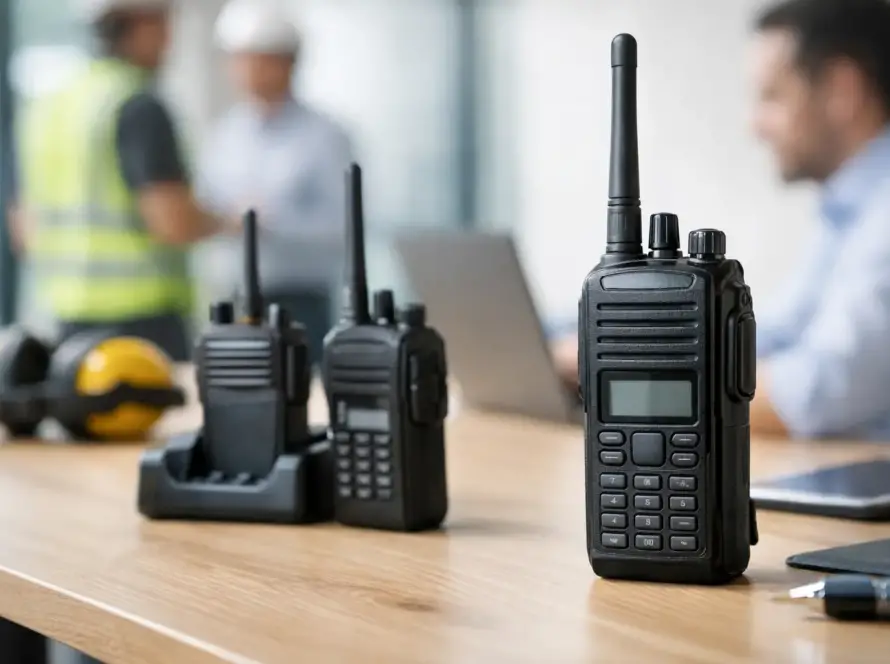
Land mobile radio remains a core tool for many organizations because it offers direct, fast group communications and can continue operating when commercial networks are unreliable. DMR systems can support organized team communications with stronger control, while analog still has value in some simpler or legacy environments. Push-to-Talk over Cellular can extend reach and connect users who operate beyond traditional radio footprints. The best choice depends on geography, density, budget, and how much control you need over infrastructure.
There is always a trade-off. Radio offers speed and local independence, but coverage design and infrastructure matter. PoC can offer broad reach and easier scaling, but it depends more on carrier conditions. Satellite may provide critical contingency for remote or isolated operations, yet it is not always the first tool teams want to use for routine coordination. Planning should account for these trade-offs openly instead of assuming one platform will cover every use case.
For many organizations, the answer is not radio versus cellular. It is radio for primary field coordination, PoC for wider-area connectivity, and defined fallback paths when either one is degraded. That kind of layered design gives supervisors and field teams options without creating confusion.
Emergency communications system planning for real users
The system should match the way people work, not the other way around. That sounds obvious, but many communication plans are still written around technical diagrams instead of user behavior.
A facilities team may need simple, always-on group calling with minimal channel switching. A transport operation may need dispatcher control, vehicle tracking, and clear separation between routine traffic and incident traffic. A marina or marine service provider may need dependable coverage across docks, vessels, maintenance teams, and administrative staff, with different priorities depending on weather conditions and movement patterns.
This is where role-based planning helps. Separate users into groups based on what they must do during normal operations and during disruption. Then assign communication paths that are easy to remember under stress. If a plan requires too many exceptions, users will improvise, and improvised communications are rarely efficient when timing matters.
Clear talk group structure, naming conventions, escalation rules, and fallback procedures are just as important as signal strength. Teams need to know when to move from a primary group to a backup channel, when to switch from wide-area traffic to site-specific traffic, and who controls that decision.
Coverage, power, and redundancy decide performance
In emergency planning, infrastructure details often make the difference between a functioning system and a failed one. Coverage studies, site placement, antenna selection, and backup power should not be afterthoughts.
Island and coastal environments add complexity. Terrain changes, reinforced buildings, waterfront activity, and weather exposure can all affect propagation and site resilience. A system that looks adequate on paper may underperform in a concrete service area, a hillside neighborhood, or a remote shoreline work zone. Field validation is essential.
Power planning deserves the same attention. If repeaters, network switches, dispatch consoles, or chargers lose power quickly, your communications plan may collapse even if your radios are functioning. Backup batteries, generator support, protected network paths, and routine testing should be part of the design from the beginning.
Redundancy also needs to be intentional. Some organizations assume redundancy means buying extra devices. In practice, redundancy is broader than spare handsets. It includes alternate sites, backup transport paths, secondary dispatch methods, local mode operation, and documented failover procedures. Not every organization needs the same level of redundancy, but every organization should know what happens when the primary path is gone.
Training is part of the system
A communication system is only as dependable as the people using it under pressure. Emergency plans often fail because teams are unfamiliar with channel layouts, battery discipline, priority procedures, or the difference between routine and emergency traffic.
Training does not need to be complicated to be effective. It needs to be consistent, role-specific, and realistic. Run short drills that test actual workflows. Ask whether supervisors can reroute teams quickly, whether field users know the backup procedure, and whether dispatch can manage elevated traffic without creating bottlenecks.
It also helps to keep documentation practical. Quick-reference guides, labeled channel plans, charging procedures, and escalation contacts should be easy to access. Long binders that no one reads are not a substitute for usable operating guidance.
Maintenance and review keep the plan credible
Emergency communications system planning is not finished when equipment is installed. Networks age, sites change, teams expand, and operational priorities shift. A system that worked well two years ago may now have blind spots, overloaded groups, outdated batteries, or unsupported dependencies.
That is why maintenance and periodic review are part of readiness, not separate from it. Preventive service, battery replacement schedules, software and firmware management, repeater testing, and coverage checks all support emergency performance. The same goes for reviewing contact lists, user permissions, and dispatch procedures.
For organizations in the U.S. Virgin Islands, this review cycle is especially valuable before peak storm periods or operationally busy seasons. Planning works best when it reflects current infrastructure conditions and current staffing realities, not assumptions carried over from prior years.
Cwave Communications often sees the strongest results when organizations treat communications as a lifecycle service instead of a one-time purchase. That approach usually reduces surprises because maintenance, support, and operational changes are considered before the next disruption arrives.
What a strong plan looks like in practice
A strong plan is not necessarily the most complex one. It is the one your team can use confidently when conditions are changing fast. It defines who communicates, over what path, from which locations, with what backup if the first option fails. It accounts for power loss, coverage limitations, user behavior, and maintenance realities.
If your current plan depends on people remembering workarounds, guessing which channel to use, or hoping public networks stay available during a high-demand event, it is probably time to revisit the design. The right planning process brings communications back to something every operation needs – clarity under pressure.
The best time to test a communications plan is when nothing is wrong yet. That is usually when the most useful fixes are still affordable, practical, and easy to implement.