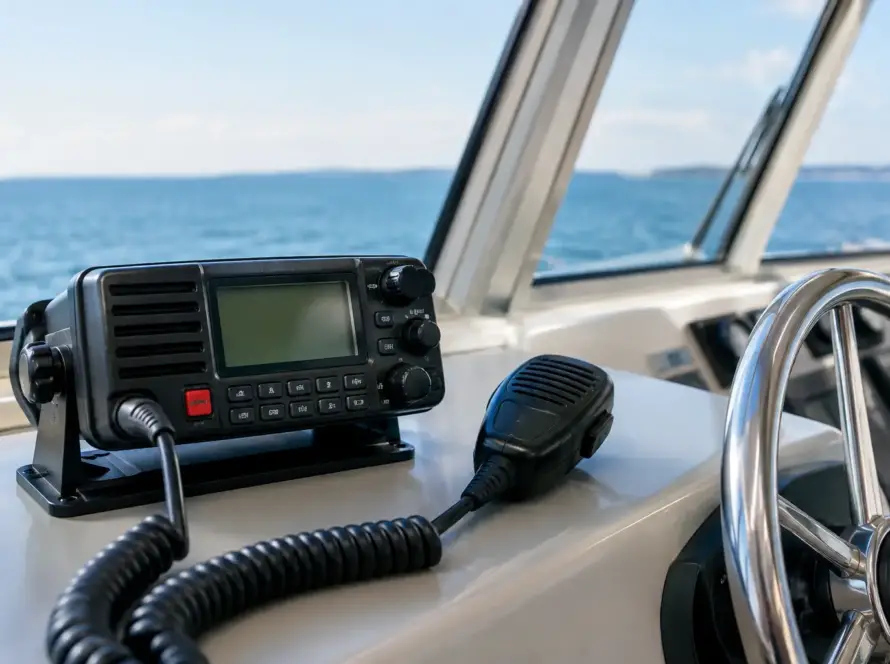
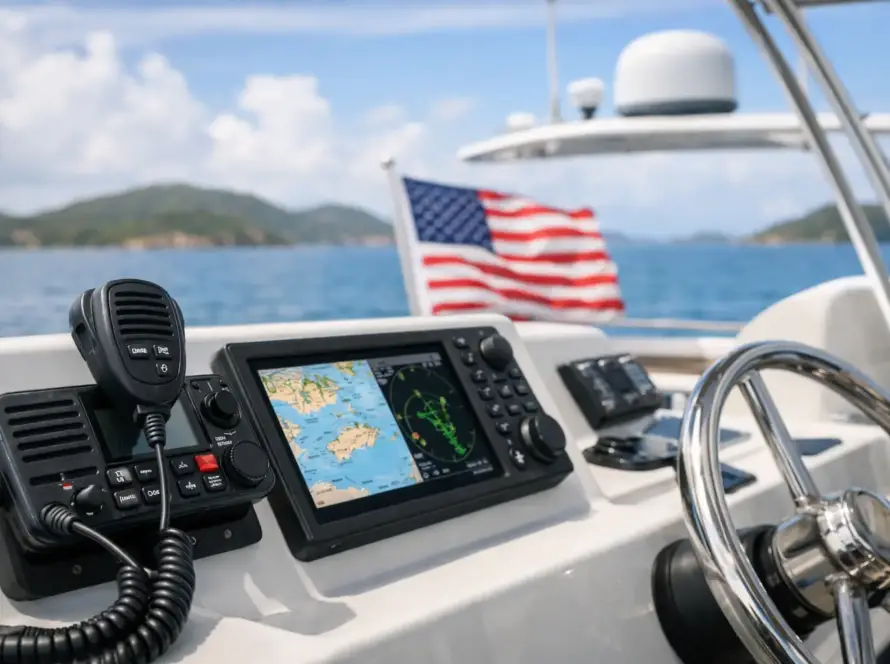
When a field crew moves from Charlotte Amalie to a remote job site on Saint John, or a vessel shifts beyond the practical range of a local repeater, communication failures become operational problems fast. A hytera poc radio system is built for that exact gap – giving teams radio-style push-to-talk over cellular networks so they can stay connected across islands, ports, roads, and facilities without depending only on traditional RF coverage.
What a hytera poc radio system actually does
Hytera PoC, or Push-to-Talk over Cellular, combines the familiar workflow of a two-way radio with the reach of cellular and IP-based networks. Users press a PTT button, speak immediately, and connect to individuals or groups much like they would on a conventional radio system. The difference is in the transport layer. Instead of relying only on local repeaters and licensed RF channels, voice traffic runs through cellular data or Wi-Fi.
For many organizations, that changes the planning model. You are not limited to the footprint of a single site or tower. If users have network access, they can communicate across Saint Thomas, Saint John, Saint Croix, and beyond. That makes PoC especially useful for distributed operations, mobile supervisors, maritime support teams near shore, transportation coordinators, security contractors, and public-sector departments that need broad-area communications without building out a full multi-site radio network first.
PoC is not a replacement for every radio environment. It is a tool with clear strengths. In the right operating profile, it can reduce deployment time, simplify expansion, and support mixed teams that need coverage across a wider geography than conventional radio alone can provide.
Why Hytera PoC fits USVI operating conditions
Island communications planning is rarely theoretical. Terrain, building density, shoreline operations, weather exposure, and infrastructure variability all affect performance. That is why system design matters as much as device selection.
A Hytera PoC platform fits the U.S. Virgin Islands well because many organizations need communications that extend across separate islands, moving vehicles, workboats, commercial facilities, and field crews. In those situations, local radio coverage may be excellent in one area and limited in another. Cellular-backed push-to-talk helps bridge those gaps, particularly for organizations that need fast rollout and centralized control.
There is also a practical staffing advantage. Teams already understand radio behavior. They do not need to manage a complicated calling workflow or rely on consumer apps not built for operational use. A dedicated PoC radio keeps communication disciplined – one button, one talk path, one managed system.
For organizations balancing cost, coverage, and speed of implementation, that matters. Building a conventional network can be the right answer, but it takes planning, licensing, infrastructure, and maintenance. A PoC deployment can often be implemented faster, especially when the operating priority is wide-area voice coordination rather than isolated site coverage.
Core benefits of a Hytera PoC radio system
The main advantage is range. A Hytera PoC radio system is not constrained by the footprint of a single repeater or local RF architecture. If the network is available, the user can communicate. For operations spread across multiple islands or large service territories, that is a meaningful shift.
The second advantage is control. Hytera PoC systems can support dispatching, user management, group calling, GPS location visibility, and recording depending on the configuration. That gives supervisors and communications managers better oversight of mobile teams, especially when personnel are spread across ports, warehouses, roads, resorts, utility sites, or government facilities.
The third advantage is deployment speed. Conventional radio systems require infrastructure planning and coverage engineering. PoC still needs proper design, device provisioning, and policy controls, but it can be brought online much faster when the environment supports it. That makes it attractive for growing organizations, seasonal surges, temporary projects, and operations that need communications in place without a long buildout timeline.
There is also an interoperability benefit in some use cases. PoC can complement existing radio fleets rather than displace them. An organization may keep DMR or analog radio for local site operations and use PoC for managers, roaming staff, logistics personnel, or inter-island coordination. That hybrid model is often more realistic than an all-or-nothing migration.
Where PoC works best – and where it does not
PoC is strong in operational environments where users travel across broad areas and need managed group communications. Good examples include property management across multiple sites, transportation and logistics, private security, hospitality operations, utility field services, facilities management, service fleets, and nearshore maritime support. It is also useful when leadership or supervisors need to stay connected while moving between islands or between office, vehicle, and field environments.
The trade-off is network dependence. PoC depends on cellular data or Wi-Fi. If a user is in a dead zone, the system cannot perform like a conventional radio network with strong local RF coverage. For that reason, PoC should be evaluated carefully for remote terrain, hardened emergency operations, or offshore scenarios where terrestrial cellular service may not be consistent.
Latency is another consideration. Modern PoC systems are generally fast enough for most operational communications, but they do not always behave exactly like a tightly engineered LMR system. If your use case involves highly time-sensitive tactical traffic or direct mode fallback requirements, a conventional radio platform may still be the better primary system.
Security and administration also matter. A managed Hytera platform gives organizations more control than consumer communication apps, but the system still needs proper provisioning, policy settings, and lifecycle support. A good deployment is not just about handing out devices. It requires planning around users, talk groups, coverage expectations, dispatch workflows, and support procedures.
Planning a Hytera PoC radio system the right way
A successful PoC deployment starts with operations, not hardware. The first question is not which radio model to buy. The first question is how your teams work. Are they always mobile, mostly indoors, spread across multiple islands, or split between office staff and field units? Do they need one-to-one calling, emergency alerts, live dispatch visibility, or location tracking? Those requirements shape the system.
Coverage assessment comes next. Because PoC relies on network access, the design process should account for where teams actually operate, including ports, hillsides, hotel structures, industrial buildings, transportation corridors, and shore-side areas. A system that looks fine on paper can fail in the field if dead zones and congestion are ignored.
Device selection should match duty conditions. Some users need a compact handheld with familiar radio ergonomics. Others may need stronger battery life, audio performance, accessory support, or ruggedization for salt, heat, and moisture exposure. In the USVI, environmental conditions are not a side issue. They are part of the communications plan.
Dispatch integration should also be considered early. If the organization wants centralized supervision, incident coordination, GPS-based workforce visibility, or recorded communications, those capabilities should be built into the deployment from the start rather than added later as an afterthought.
This is where an experienced regional provider matters. Cwave Communications approaches PoC as part of a broader mission-ready communications strategy, not as a standalone device sale. That means aligning coverage, fleet management, support, and long-term reliability with the realities of island operations.
Hytera PoC versus DMR or analog radio
For many buyers, the real question is not whether PoC is good. It is whether PoC is the right fit compared to DMR or analog radio.
DMR remains a strong choice when organizations need controlled local-area coverage, strong voice performance, independence from public cellular networks, and more predictable behavior in engineered radio environments. Analog can still make sense for simple, smaller deployments where budget is tight and feature requirements are limited.
PoC stands out when geographic reach, rapid deployment, and centralized visibility matter more than owning every layer of RF infrastructure. It is often the better option for multi-island coordination or organizations that want radio discipline without the cost and complexity of a larger conventional build.
The right answer is often a combination. A site may use DMR for campus or facility communications and PoC for roaming management staff, remote supervisors, and inter-island communications. That layered approach gives operations teams both local resilience and wide-area reach.
What decision-makers should ask before buying
Before selecting a system, ask how much of your operation depends on public cellular coverage, what areas need guaranteed communications, and whether your teams need dispatch oversight or simple group calling. Ask how the system will be supported after deployment, how devices will be provisioned, and what happens when users, sites, or operational requirements change.
Those questions matter because communications systems are not static. Teams grow, coverage patterns shift, and emergency procedures evolve. A well-chosen Hytera PoC system should not only work on day one. It should remain manageable and effective as the mission changes.
The best communication platform is the one that matches the way your teams actually operate. If your personnel move across islands, facilities, road networks, and shoreline environments, PoC deserves a serious look – especially when you need wide-area coverage with radio simplicity and operational control. Choose the system that keeps your people reachable when the work gets real.