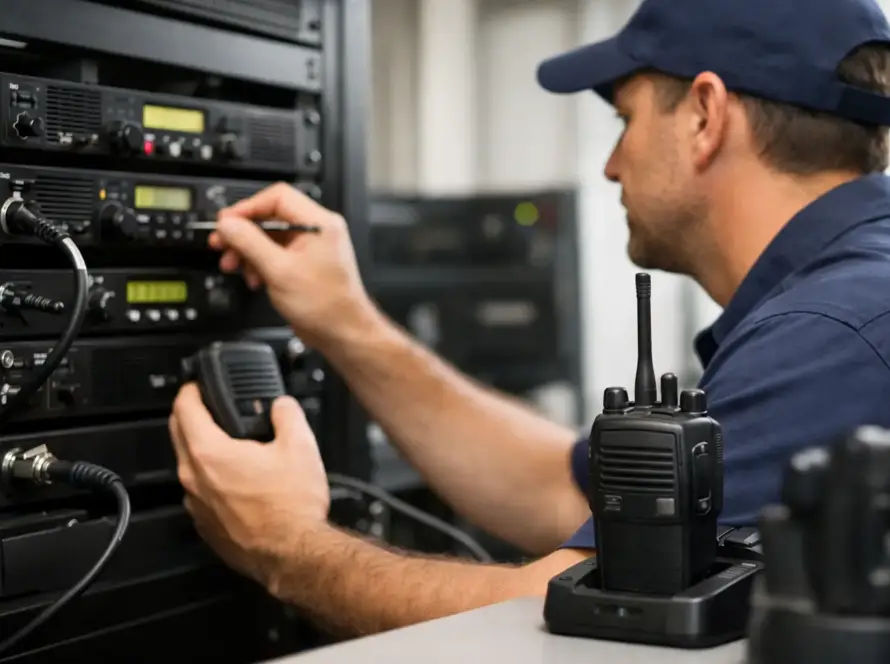
A marine radio is not simply another electronic device at the helm. When weather shifts, an engine alarm sounds, or a crew member needs assistance over the side, it may be the fastest and most dependable way to reach another vessel, a marina, or emergency services. For operators in the U.S. Virgin Islands, marine radios also support the routine work that keeps charters, workboats, ferries, service vessels, and waterfront operations moving safely.
The right radio system begins with more than selecting a handheld or fixed-mount unit. It requires a clear view of where vessels travel, who needs to communicate, what happens when cellular coverage is limited, and how the equipment will be maintained in saltwater conditions.
Why Marine Radios Remain Essential
Cell phones are useful on the water, but they are not a replacement for marine VHF communication. A mobile phone reaches one person at a time and depends on carrier coverage, battery condition, and a working contact list. A VHF radio allows a vessel to communicate openly with nearby traffic, monitor safety information, and call for assistance on recognized channels.
That shared awareness matters. A captain approaching a busy harbor can hear local traffic. A charter operator can coordinate an arrival with a dock. A work crew can maintain contact between vessels without relying on personal phones. When an urgent situation develops, other boats in range may hear the transmission and respond even before a formal rescue resource arrives.
For commercial operators, radio reliability is also an operational issue. Delayed arrivals, unclear docking instructions, and missed weather updates can affect schedules, customer safety, and vessel availability. A properly selected and maintained radio system helps reduce those avoidable communication gaps.
Fixed-Mount and Handheld Marine Radios
Most vessel operations benefit from understanding the different roles of fixed-mount and handheld radios. One is not automatically better than the other. The right choice depends on vessel size, operating area, crew procedures, and the consequences of losing communications.
Fixed-Mount Radios for Primary Communications
A fixed-mount VHF radio is generally the primary radio for a vessel that operates regularly offshore, carries passengers, supports commercial work, or needs dependable range. These radios are hardwired to vessel power and connected to an external antenna mounted as high and as clearly as practical.
Antenna height is a major factor in VHF performance because VHF signals generally travel by line of sight. A quality radio paired with a poorly installed, obstructed, or damaged antenna will not deliver the range an operator expects. On many boats, improving antenna placement and cable condition produces a more meaningful result than replacing the radio alone.
Fixed radios can also support useful safety features, including Digital Selective Calling, or DSC, when properly programmed with a Maritime Mobile Service Identity number. DSC can transmit an emergency alert with vessel identification and, when connected to a GPS source, location data. That capability depends on correct installation, registration, configuration, and crew familiarity. Equipment is only effective when people know how to use it under pressure.
Handheld Radios for Mobility and Backup
Handheld VHF radios are valuable on smaller vessels, for tender operations, and as a backup if the primary electrical system or fixed radio fails. They allow crew members to move around the vessel while staying in contact with the helm or nearby boats.
The trade-off is range and endurance. A handheld radio has a smaller antenna, lower transmitting power, and a battery that must be charged and monitored. It should be selected for the actual environment, including waterproofing, float capability, battery availability, charging options, and speaker clarity in wind and engine noise.
For many commercial vessels, the practical approach is a fixed-mount radio for primary vessel communications and one or more charged handheld radios for redundancy and crew mobility. That combination gives the operation a backup path without asking a handheld unit to perform beyond its limits.
Selecting Marine Radios for the Job
Buying a radio based only on price or advertised wattage can create problems later. Start with the vessel’s communication requirements. A day-charter vessel has different needs than a dive operator, marina service crew, inter-island workboat, or fishing vessel operating farther from shore.
Consider how many people need to communicate and whether communications must extend beyond vessel-to-vessel VHF. A business may need marine VHF for water operations while also using professional two-way radios or push-to-talk over cellular for dock personnel, dispatch, maintenance teams, and supervisors ashore. The goal is not to force every conversation onto one device. The goal is to give each team a dependable path for the work it performs.
When evaluating equipment, assess these operational factors:
- Transmit power, receiver performance, and expected coverage in the vessel’s normal operating area.
- Antenna type, mounting position, cable quality, grounding, and corrosion protection.
- DSC and GPS integration requirements, including proper registration and testing.
- Waterproof rating, display visibility, audio quality, and controls that can be used in wet conditions.
- Battery and charging strategy for handheld units, including a ready spare for extended operations.
- Installation, inspection, repair, and support capability after the initial purchase.
The final point is often overlooked. A radio system installed correctly and supported locally is usually more valuable than a feature-heavy unit that no one can configure, test, or repair when it matters.
Channel Discipline Is Part of Safety
Clear radio procedure improves safety and reduces unnecessary congestion. Crews should know which channels are used for calling, distress, safety, local working communications, and port or marina coordination. They should also understand when to move a routine conversation away from a calling channel after contact has been made.
Before a vessel departs, the operator should verify that the radio powers on, the antenna connection is secure, the correct channels are available, GPS data is present where applicable, and handheld batteries are charged. A brief radio check with an appropriate station or another vessel can confirm basic operation, but crews should avoid unnecessary transmissions on emergency and calling channels.
Training should cover more than button presses. Personnel need to know how to state a vessel name, position, nature of distress, number of people aboard, and immediate assistance required. In a real emergency, concise information is more useful than a long, unstructured transmission.
Installation and Maintenance in Caribbean Conditions
Salt air, heat, humidity, vibration, and heavy rain place constant stress on marine electronics. Corrosion can build inside connectors, antenna mounts can loosen, cables can chafe, and speaker performance can degrade gradually. A radio may appear functional at the dock yet perform poorly at distance when its antenna system has been compromised.
Routine inspection should include the antenna mount, coaxial cable, connectors, power wiring, fuses, microphone cord, mounting hardware, and handheld charging contacts. Look for green or white corrosion, cracked insulation, loose connections, water intrusion, and areas where movement can wear through a cable.
A professional installation protects wiring, uses marine-appropriate components, secures equipment against vibration, and accounts for radio frequency performance as well as physical durability. This is especially relevant for vessels that operate frequently between Saint Thomas, Saint John, and Saint Croix, where changing terrain and distance can affect practical communications coverage.
Cwave Communications can help operators evaluate marine radio requirements alongside broader business communications, network, and support needs. The focus should remain on a system that fits the vessel, the crew, and the actual operating environment – not a one-size-fits-all equipment package.
Build a Communications Plan, Not Just a Purchase Order
A dependable marine communications setup has layers. The primary VHF installation supports normal operations and emergency calling. A charged handheld provides backup. Crew procedures establish who monitors the radio and how calls are handled. Preventive maintenance keeps the system ready. For larger operations, shore-side communications and dispatch tools provide another layer of coordination.
There are limits to every radio system. VHF coverage can be affected by terrain, antenna height, weather conditions, vessel location, and interference. A satellite device, cellular service, or another approved communications method may be appropriate for operations beyond the practical reach of local VHF communications. Planning for those limits is a sign of sound operational judgment.
The best time to find a weak antenna connection, a dead handheld battery, or an untrained crew member is before leaving the dock. Treat marine radio readiness as part of the vessel’s normal operating routine, and the system will be far more likely to perform when the water gets busy or conditions turn uncertain.