A dispatcher on Saint Thomas needs to reach a driver on Saint Croix, while a marina team needs instant contact between the dock, vessel, and maintenance shop. The PoC vs two way radio decision is not about choosing the newest device. It is about choosing the communications path that will still serve the operation when distance, terrain, weather, building construction, and network availability start to matter.
For many U.S. Virgin Islands organizations, the right answer is not strictly one system or the other. It depends on where teams work, how quickly they must communicate, what happens when public networks are unavailable, and how much control the organization needs over coverage.
PoC vs Two Way Radio: The Core Difference
Push-to-Talk over Cellular, commonly called PoC, uses cellular data and Wi-Fi to deliver the familiar push-to-talk experience. A user presses a button, speaks, and reaches an individual, group, or entire organization through a managed platform. Because communications travel over IP networks, a PoC user can often communicate well beyond the range of a conventional radio system.
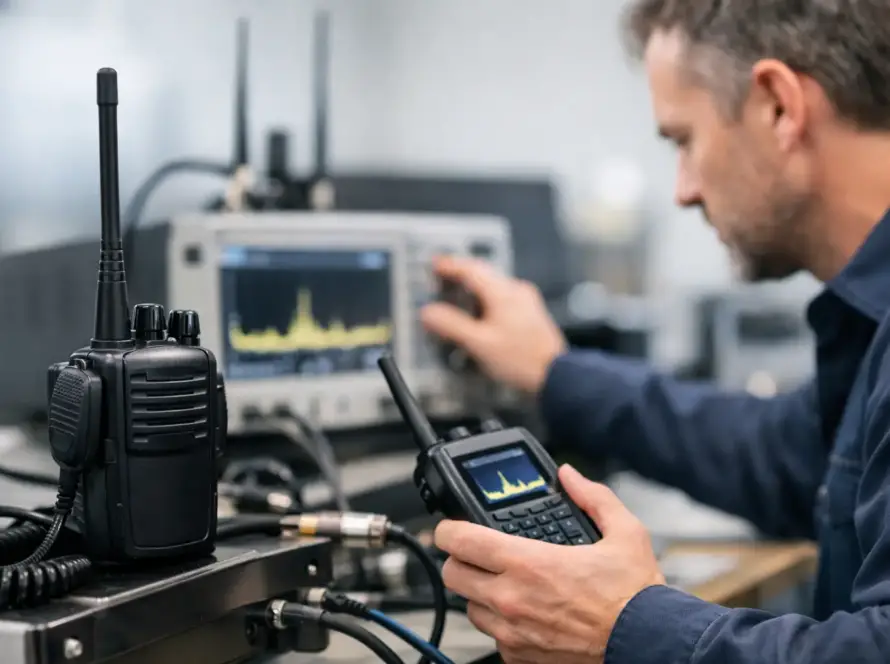
Traditional two-way radio uses licensed radio frequencies. An analog or DMR radio can communicate directly from radio to radio, through a repeater, or through a designed radio network. It does not require a cellular subscription for the basic radio path. Its usefulness is determined by RF coverage, system design, terrain, antenna placement, and the condition of local equipment.
That distinction changes how each solution performs. PoC extends communications wherever reliable cellular or Wi-Fi data is available. Two-way radio provides a dedicated communications method that can continue to work locally when commercial data service is limited or disrupted.
Where PoC Has the Advantage
PoC is well suited to teams that work across broad geographic areas without needing to build and maintain a wide-area radio network. A property management company with staff moving between sites, a delivery operation with drivers across multiple islands, or a service organization coordinating personnel from an office can benefit from its reach.
The system can make geographically separated teams feel like they are on one channel. A supervisor can create talk groups for operations, maintenance, security, or management. Authorized users may communicate from compatible handheld devices, vehicle units, or smartphones, depending on the platform and policy. Dispatch functions, location awareness, messaging, call records, and user management are also commonly available.
For organizations with dependable data coverage in the places their teams work, this can reduce the need for multiple radio sites, repeaters, and tower infrastructure. It also makes adding a new user relatively straightforward. The device still needs to be configured and managed correctly, but the organization is not limited by the RF footprint of a single repeater.
PoC also works particularly well when calls must cross island or extend to off-island leadership. A facilities manager on Saint Croix can communicate with a decision-maker traveling in the mainland United States without changing the operational workflow for field staff.
The PoC trade-off: It follows the network
PoC performance is tied to the data path. If cellular service is weak, overloaded, or unavailable in a work area, call setup and audio quality can suffer. Wi-Fi can fill gaps inside facilities, but only if the wireless network is engineered and maintained for that purpose.
This does not make PoC unreliable. It means the organization must evaluate the cellular and Wi-Fi environment as part of the communications system. Coverage testing should include docks, equipment rooms, hillsides, parking areas, concrete structures, remote work locations, and the routes personnel actually travel. A coverage map alone is not a field test.
Where Two-Way Radio Has the Advantage
A properly designed two-way radio system is built for immediate, focused communications. Users select the assigned channel or talk group, press the button, and communicate with the team. There is no need to unlock a phone, open an application, locate a contact, or depend on a general-purpose device being charged and available.
That directness matters for crews handling time-sensitive work. Marine operations, maintenance teams, construction sites, hospitality security, utilities, and public-facing operations often need short, clear exchanges that keep people coordinated while their hands and attention remain on the job.
Two-way radio is also the stronger choice when local communications must continue independently of commercial cellular networks. In direct mode, compatible radios can communicate radio-to-radio within their available range. In a repeater-based design, the coverage area depends on the system architecture, antenna height, RF environment, and power arrangements. Backup power and properly maintained infrastructure can be as important as the radios themselves.
For island operations, terrain is not a minor consideration. Hills, valleys, dense concrete construction, waterfront structures, and distance across water can all affect RF behavior. A radio system designed from actual site information can provide predictable coverage where generic consumer devices cannot.
The radio trade-off: Coverage takes infrastructure
Two-way radio coverage is not automatically island-wide. A handheld radio has practical limits, especially between obstructed locations. Expanding coverage may require repeaters, antennas, linking, licensed frequencies, site access, engineering, and ongoing maintenance.
That investment can be justified when communications are operationally critical. But it should be based on a coverage objective, not on assumptions. A warehouse may only need dependable building and yard coverage. A port, resort, utility, or multi-site operation may need a more deliberate system design.
Call Quality, Speed, and User Experience
Both options can provide clear voice when deployed appropriately, but they feel different in use. Traditional radio generally provides a highly consistent push-to-talk workflow with very fast access on the local system. It is familiar to crews that need brief, frequent exchanges throughout the day.
PoC can deliver excellent audio and broad reach, though call setup may vary with network conditions. Its interface can also support richer operational features that a conventional radio channel does not provide, such as presence status, text messages, location data, and centralized administration.
The user environment should guide the choice. A field worker wearing gloves, working near machinery, or moving between vehicles may need a purpose-built radio with dedicated controls, loud audio, and accessories suited to the job. An administrator, supervisor, or mobile employee may value the flexibility of a PoC device or smartphone-based workflow.
Security and Control Require Different Planning
Neither technology should be treated as automatically secure simply because it is professional-grade. Each requires clear configuration and management.
PoC security involves user identities, device access, platform permissions, account management, data policies, and the integrity of the cellular or Wi-Fi connection. Organizations should define who can access each talk group, how lost devices are handled, and whether location or message data is retained.
Two-way radio security can include licensed frequency use, access controls, digital features, radio programming, and, where appropriate, encryption. The right approach depends on the operational need and applicable requirements. Equally important is controlling who can alter programming, add radios to the fleet, or change channel assignments.
For both systems, a communications plan should establish naming conventions, talk-group structure, emergency procedures, device assignment, charging practices, and a support process. Technology performs better when users know exactly how it fits the operation.
Cost Is More Than the Device Price
PoC often has a lower initial infrastructure requirement, but it typically includes recurring data and platform costs. The long-term budget should account for devices, accessories, subscriptions, replacement cycles, mobile device management where needed, and support.
Two-way radio may require greater upfront investment when repeaters, antennas, site work, and licensing are needed. Over time, the system also needs battery replacement, radio repair, preventive maintenance, coverage verification, and infrastructure support. A lower-cost radio purchase can become expensive if it does not meet coverage requirements or cannot be serviced locally.
The useful comparison is total operational cost, not just purchase price. Ask what missed calls, delayed response, unplanned downtime, and unmanaged devices cost the organization. Then compare that risk against the cost of designing the system correctly.
When a Hybrid Design Makes Sense
Many organizations get the best result by using both technologies for different parts of the operation. Two-way radio can support on-site crews and locations where dedicated local coverage is essential. PoC can connect supervisors, mobile teams, remote facilities, and cross-island personnel through a wider communications group.
This approach avoids forcing a single tool into every situation. A marina may use radios around the docks and maintenance areas while using PoC for management coordination across islands. A business with field technicians may issue radios for active job sites and PoC devices for travel, dispatch, and after-hours coverage.
Cwave Communications can assess the operational environment, coverage requirements, devices, and support needs before recommending a Hytera PoC, DMR, analog, or combined solution. The goal is not more equipment. It is a communications system that matches how the team actually works.
The most useful next step is to map a normal workday and a difficult one. Identify who must talk to whom, where communications fail today, and what must continue during a network interruption. Those answers will point to the system your operation can depend on when conditions are less than ideal.