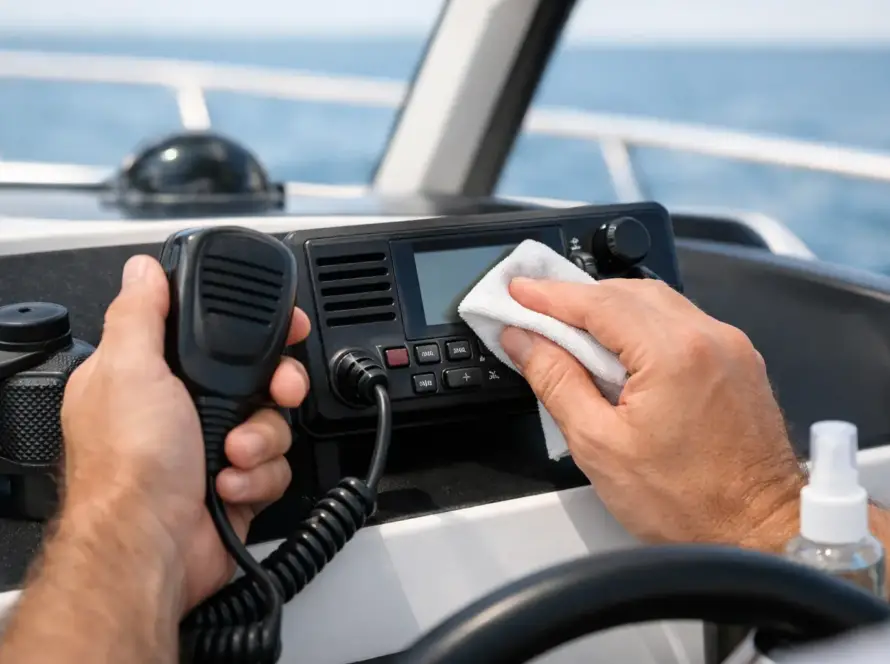
A radio that powers on is not necessarily a radio that is ready for work. On Saint Croix, heat, salt air, rain, dust, heavy vehicle use, and long shifts can gradually affect batteries, antennas, charging equipment, and audio quality. Saint Croix radio maintenance is the practical discipline of finding those issues before a missed call becomes a safety, service, or operational problem.
For businesses, marine operators, facilities teams, and public-sector organizations, radio maintenance is not a cosmetic task or an afterthought after installation. It is part of protecting the communications system that coordinates people, vehicles, assets, and response activities when cellular service is congested, coverage is inconsistent, or hands-free communication is required.
Why Radio Maintenance Matters on Saint Croix
Island operating conditions create a different maintenance profile than a typical indoor office environment. Salt-laden air can contribute to corrosion at antenna connections, vehicle mounts, charging contacts, and exterior equipment. Moisture intrusion can affect seals and accessories. Heat can shorten battery life, while drops, vibration, and daily handling place steady stress on portable radios and mobile installations.
The result is often gradual degradation rather than a single obvious failure. A radio may transmit at reduced performance, receive poorly in a known coverage area, produce weak audio, or lose operating time halfway through a shift. These are early warnings, not inconveniences to work around.
A planned maintenance program helps an organization identify patterns across its fleet. If several users report short battery life, the issue may be aging batteries, improper charging practices, or a charger bank problem. If a vehicle group experiences intermittent coverage, the cause may be a damaged antenna, compromised coaxial cable, or a system configuration issue. Proper diagnosis prevents money from being spent on the wrong repair.
What Saint Croix Radio Maintenance Should Cover
Effective service looks at the full communications path, not just the radio in a user’s hand. A technician should inspect physical condition, verify operating performance, and confirm that accessories and infrastructure are supporting the intended use.
For portable radios, maintenance commonly includes checking housings, knobs, displays, buttons, belt clips, antenna connections, speaker microphones, earpieces, batteries, and charging contacts. Audio quality matters as much as transmit capability. A radio with a blocked microphone port or failing speaker microphone may technically connect to the system but still be unreliable in a noisy work environment.
Battery service deserves close attention. Batteries lose capacity over time, particularly when exposed to heat or repeatedly charged under poor conditions. Teams should monitor runtime, charging behavior, physical swelling, damaged contacts, and battery age. Replacing batteries on a planned cycle can be more cost-effective than waiting for several units to fail during active operations.
For mobile radios installed in vehicles, equipment checks should include mounting hardware, power connections, fuses, antenna placement, coaxial cable condition, grounding, and transmit and receive performance. A loose power lead or weathered roof antenna can create intermittent faults that are difficult for drivers to describe but easy to identify through proper testing.
System-level maintenance may also involve repeaters, base stations, dispatch positions, power supplies, backup power, network connections, software configuration, and coverage testing. This is especially relevant for organizations using DMR, analog, or Push-to-Talk over Cellular solutions. Each platform has different service requirements, but all depend on disciplined configuration control and regular performance verification.
Build Maintenance Around Actual Operations
The right maintenance interval depends on use, environment, equipment type, and the consequence of failure. A small office with a few lightly used radios may need periodic inspection and battery review. A fleet, marina, utility contractor, resort, security operation, or field service organization may need a more structured schedule because equipment is exposed to daily wear and communications delays affect operations directly.
A useful approach is to separate routine user checks from scheduled technical service. Users can inspect radios at the start of a shift, confirm battery charge, test audio, and report damage promptly. Supervisors can track recurring issues by unit number, user group, vehicle, or location. Technical maintenance can then address deeper testing, programming verification, antenna work, repairs, and system health checks on a regular schedule.
Documentation turns service activity into operational intelligence. Record the radio ID, reported symptom, battery age, repair completed, configuration changes, and test result. Over time, this record identifies which accessories fail most often, where corrosion is recurring, and whether a particular vehicle or work location needs attention. It also helps managers budget for replacements instead of facing unexpected fleet-wide expenses.
Warning Signs That Need More Than a Quick Fix
Some issues can be resolved with cleaning, a replacement accessory, or a charged battery. Others indicate a problem that should be evaluated before the radio returns to service. Intermittent transmit or receive, a sudden reduction in range, distorted audio, repeated missed calls, overheating, water damage, and charging failures all merit attention.
Coverage complaints should be handled carefully. A user may report that a radio “does not work” in a certain area, but the underlying cause could be a damaged portable antenna, a vehicle installation issue, a channel programming change, a site equipment fault, or an actual coverage limitation. Testing with known-good equipment and reviewing the system design is more reliable than replacing radios one at a time.
Do not ignore damaged seals, cracked housings, bent antenna connectors, or loose batteries. Those physical defects can allow moisture and debris into the equipment, turning a manageable repair into a complete radio replacement. Taking a compromised unit out of rotation early can protect the rest of the fleet from inconsistent communication practices.
Repair, Reprogram, or Replace?
A disciplined maintenance decision considers cost, remaining service life, operational risk, and compatibility with the rest of the fleet. Replacing a speaker microphone, antenna, battery, control knob, or charging accessory is often sensible when the radio itself remains current and performs well. Reprogramming may be appropriate after a channel-plan change, user reassignment, system expansion, or security update.
Replacement becomes more compelling when repairs are recurring, manufacturer support is limited, equipment no longer meets coverage or feature requirements, or older radios create programming and accessory complications. A mixed fleet can remain functional, but it may increase training, spare-parts, and support demands. The least expensive immediate repair is not always the lowest long-term operating cost.
For organizations moving toward modern communications, maintenance is also an opportunity to assess whether the current platform still fits the job. Some teams need conventional radio coverage for local operations. Others benefit from combining radio systems with Hytera Push-to-Talk over Cellular for wider-area coordination, location services, or communications beyond a single island. The right answer depends on coverage needs, workflow, budget, and how critical uninterrupted group communication is to the mission.
Choose Service That Understands the Whole System
Radio maintenance works best when the service provider understands both the equipment and the environment where it operates. A repair that looks correct on a bench may not solve an antenna, coverage, vehicle power, network, or configuration issue in the field. Local knowledge matters when equipment must perform across varied terrain, waterfront exposure, commercial properties, and distributed work sites.
Cwave Communications, an authorized Hytera Dealer, supports organizations that need more than a replacement part. The objective is to keep communications dependable through inspection, repair, programming, fleet management, and practical system guidance. That approach supports better decisions when a radio issue is isolated, when a fleet is aging, or when communications requirements have changed.
The best time to schedule radio service is before the next busy season, major project, fleet rollout, or equipment failure. Establish a maintenance baseline now, assign ownership for user inspections and technical checks, and make each radio in the fleet accountable to the work it supports.