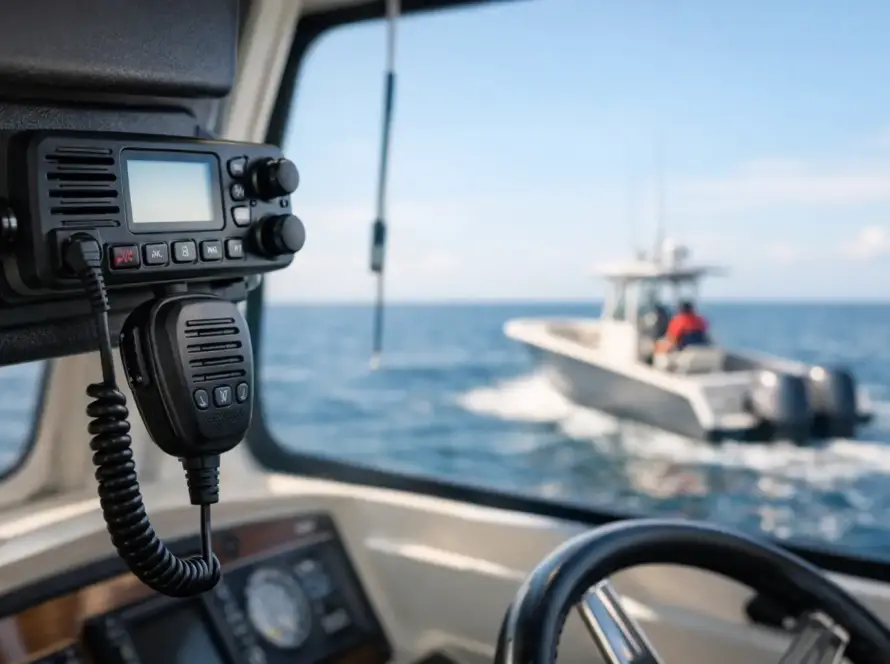
A radio replacement can look straightforward until crews lose coverage at a dock, a maintenance team cannot reach a supervisor, or an emergency call lands in the wrong talk group. For organizations that depend on daily radio traffic, digital radio migration steps must protect operations while improving the system. The goal is not simply to replace analog handsets. It is to build clearer, more manageable communications with coverage that matches how your people actually work.
For businesses, marine operators, public agencies, and distributed field teams in the U.S. Virgin Islands, migration planning needs to account for terrain, building construction, marine routes, weather exposure, and the distance between islands. A good plan starts with operational requirements and ends with a supported system your personnel will use confidently.
Start With an Operational Assessment
Before selecting radios, document how the current system performs under real working conditions. Ask where communications fail, who needs to talk to whom, and what happens when the system is unavailable. A warehouse dispatcher, a facilities team, and a vessel crew may all use radios, but their coverage needs, channel access, and safety requirements can be very different.
Map routine and critical communications separately. Routine traffic may include shift coordination, deliveries, maintenance requests, and visitor support. Critical traffic can include safety incidents, marine coordination, weather response, or infrastructure outages. This distinction helps determine whether users need dedicated talk groups, priority calling, emergency buttons, or additional coverage resilience.
The assessment should also identify what can remain in place. Existing towers, antennas, feeders, power systems, and licensed frequencies may support a phased migration, but only after technical inspection. Aging coaxial cable, poor grounding, or inadequate backup power can limit a new digital system before the first radio is issued.
Define the Digital Radio Migration Steps Before Buying Equipment
Equipment should follow the system design, not lead it. The most effective digital radio migration steps establish scope, coverage expectations, user roles, and continuity procedures before procurement. This prevents organizations from paying for features that do not support operations or overlooking capabilities they will need later.
Set measurable coverage and capacity targets
Replace broad goals such as “better coverage” with measurable requirements. Define the buildings, outdoor work areas, road corridors, docks, anchorages, or inter-island routes where radios must work. Clarify whether users need reliable voice at the edge of coverage, indoor penetration through concrete structures, or communications in areas where cellular service is inconsistent.
Capacity matters as well. A small team may operate effectively with a simple direct radio configuration. A larger organization with multiple departments may need repeaters, separate talk groups, dispatch functions, or a networked system that supports multiple sites. Digital Mobile Radio, or DMR, can provide efficient channel use and flexible group communications, but the correct design depends on user count, traffic volume, and coverage demands.
Choose the right migration model
A full cutover is appropriate when the existing system is unreliable, obsolete, or too limited to support operations. It can reduce the length of the transition, but it requires thorough preparation and a clear fallback plan.
A phased approach is often better when teams cannot pause operations. Some organizations migrate one department, facility, or island at a time while maintaining communication with analog users during the transition. Dual-mode radios can help bridge that period because they can operate on analog and digital channels where system programming and licensing allow it.
Push-to-Talk over Cellular may also be part of the answer for personnel who work beyond radio coverage or move frequently between islands. It should be treated as a complementary communications layer, not an automatic substitute for local radio. PoC depends on cellular or Wi-Fi availability, while DMR can provide local radio coverage and operational independence in areas where network access is limited.
Build talk groups around work, not job titles
Talk groups should reflect communication paths that teams use under pressure. Dispatch may need one operations group, a separate maintenance group, and an emergency group monitored by supervisors. Creating too many groups makes radios harder to use. Creating too few fills one channel with unrelated traffic and delays important calls.
Keep radio programming consistent across similar user roles. Use clear channel names, practical scan settings, and a controlled approach to emergency alerts. If a worker has to memorize complicated channel sequences to reach help, the design needs refinement.
Validate Coverage in the Field
Coverage predictions are useful, but field testing decides whether a design is ready. Test radios where work happens: inside mechanical rooms, on upper floors, behind reinforced walls, along waterfront facilities, in vehicles, and on the water where applicable. Test at different times of day if the environment changes with traffic, vessel activity, or local interference.
In Saint Thomas, Saint John, and Saint Croix, terrain can create sharp coverage changes over short distances. A radio that performs well at a main facility may struggle around hillsides, valleys, remote access roads, or between structures. A site survey should evaluate signal strength, voice quality, interference, antenna placement, and the condition of existing infrastructure.
Do not treat a coverage issue as a radio issue by default. The answer may be a repeater location, antenna height, distributed coverage equipment, better cable, or a different configuration. Correcting the system design is more effective than issuing higher-power portable radios and expecting them to overcome every obstacle.
Prepare Users and Support Teams for Cutover
Digital features only help if users know what they do and when to use them. Training should be short, role-specific, and practical. Show users how to select their normal talk group, make a private or group call if enabled, trigger an emergency alert, charge and inspect the radio, and report a problem.
Supervisors and dispatch personnel need deeper instruction. They should understand talk group assignments, priority procedures, incident documentation, and what to do if a radio, repeater, or network connection fails. Provide a simple printed quick-reference guide for field use, especially during the first weeks after deployment.
The cutover plan should name a responsible person for each operational area and establish a support contact for the first shift. Schedule the transition outside peak operational periods when possible. If a full cutover is necessary, confirm that all radios are charged, labeled, programmed, and assigned before the change window begins.
Protect Continuity With a Fallback Plan
Every migration needs a documented contingency plan. It should state what users will do if a new talk group is unavailable, if a site loses power, or if a programming error affects a set of radios. The fallback may include an analog channel, spare programmed radios, temporary dispatch procedures, backup power, or alternate communication methods.
This is also the right time to establish maintenance practices. Batteries, chargers, antennas, microphones, and portable radio accessories receive hard use in field and maritime environments. A lifecycle plan should include inspections, firmware and programming control, repair procedures, spare inventory, and periodic coverage checks. Digital systems are easier to manage when changes are documented rather than made informally from one radio to another.
Measure Performance After Deployment
The first 30 to 90 days after cutover are part of the migration, not an afterthought. Track failed calls, coverage complaints, battery issues, radio damage, missed emergency alerts, and user feedback. Patterns will show whether the issue is training, programming, hardware handling, or system coverage.
Review the results with department leaders and make controlled adjustments. A channel plan may need fewer scan options. A loading dock may need additional coverage. A team working beyond the primary service area may need a PoC option. Small corrections early prevent users from losing confidence and reverting to informal communication methods.
Cwave Communications can support organizations that need a field-ready plan for system design, Hytera radio deployment, coverage testing, programming, and ongoing service. The right migration is measured by dependable calls during ordinary work and clear communication when conditions are not ordinary. Build the system around those moments, and your radios will remain an operational asset long after the cutover date.