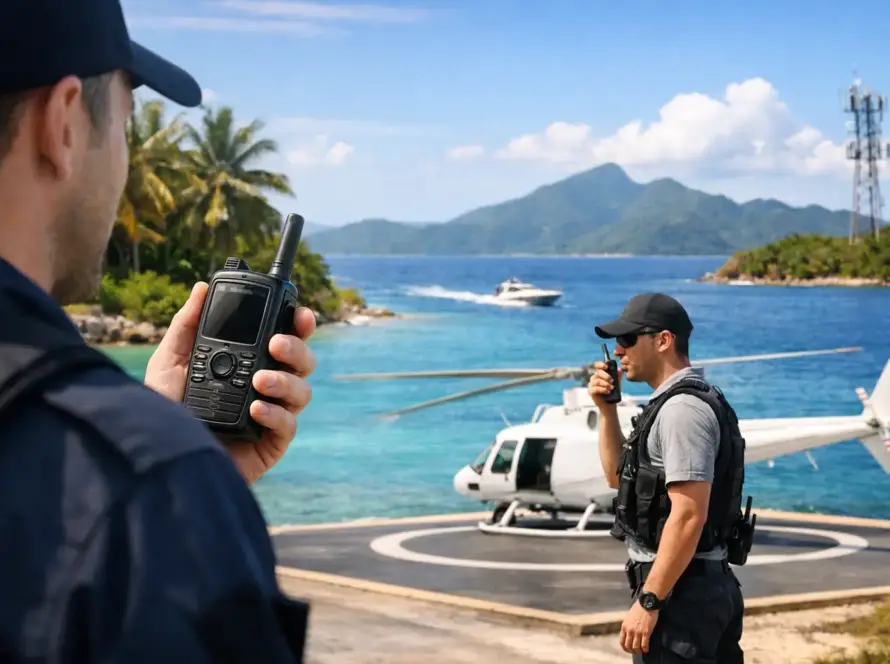
When a crew loses contact between a dock, a vehicle, and a work site, the problem is rarely just the radio in someone’s hand. It may be a depleted battery, a damaged antenna, an improperly programmed channel, weak coverage in a known dead zone, or a system that was never designed for the way the team actually works. Effective St Thomas radio support addresses the entire communications chain, not simply the device that stopped transmitting.
For businesses and agencies operating in the U.S. Virgin Islands, dependable radio service is an operational requirement. Hospitality teams, construction crews, marine operators, security personnel, facilities managers, and public-sector field teams need clear, immediate communication when cellular service is congested, conditions change, or coordination cannot wait. The right support model keeps equipment ready, coverage understood, and repairs from becoming extended downtime.
What St Thomas Radio Support Should Cover
Radio support is most valuable when it begins before an equipment failure. A dependable provider should help an organization select the appropriate technology, configure it for daily operations, maintain it over time, and respond when conditions change. That can include analog, DMR digital radio, and Push-to-Talk over Cellular systems, depending on the coverage area, user count, security needs, and operating environment.
A small property with staff working across a contained site may need straightforward handheld radios, assigned channels, charging discipline, and quick replacement service. A fleet operating across multiple islands may need a broader design that combines radio coverage with cellular-connected group communications. Maritime operations have another set of considerations, including vessel installation, environmental exposure, licensing requirements where applicable, and clear procedures for emergency use.
The correct solution depends on the job. More features do not automatically make a system more reliable. A practical design matches the equipment and network to the users, terrain, work patterns, and consequences of missed communication.
Repair is only one part of readiness
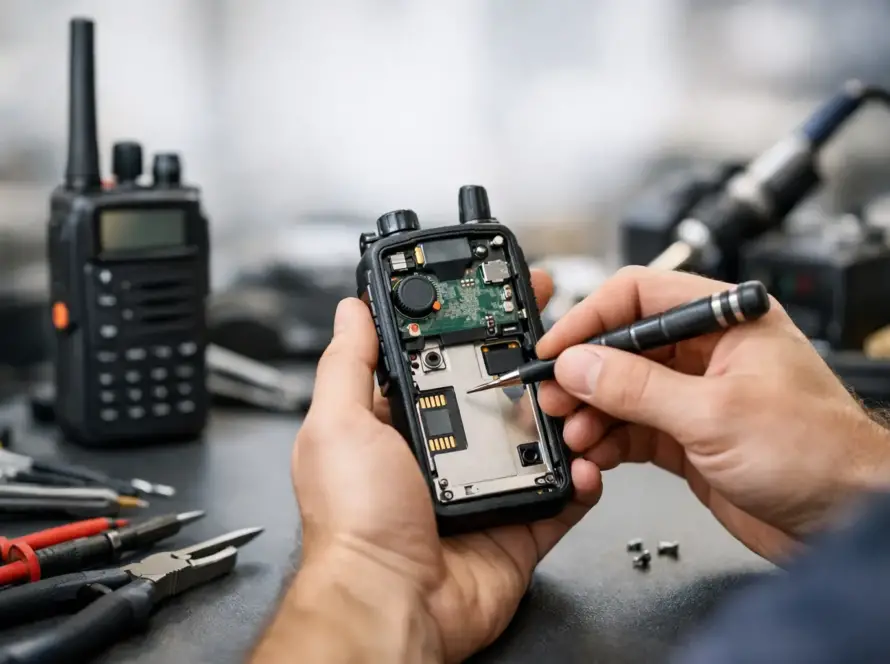
A radio that will not power on or transmit needs prompt diagnosis, but repair should not be treated as an isolated event. Repeated failures may point to charging practices, water exposure, poorly fitted accessories, aging batteries, programming errors, or physical stress from the work environment.
Qualified service identifies the root cause and verifies the radio after repair. That means checking transmit and receive performance, audio quality, battery condition, accessory connections, channel settings, and, when relevant, system registration. A radio can appear functional on a bench yet still fail in the field if it is programmed incorrectly or operating at the edge of usable coverage.
Coverage Planning for Island Operations
St. Thomas presents communications challenges that are familiar to local operators: steep terrain, dense structures, changing elevations, waterfront activity, and locations where ordinary expectations about signal strength do not hold. A radio system should be planned around real use areas rather than a map that looks acceptable from a desk.
Coverage assessment begins with clear operational questions. Where do teams work? Which locations create the most urgent need for contact? Do users need to communicate within one site, between vehicles, from vessels to shore, or across Saint Thomas, Saint John, and Saint Croix? Are conversations routine coordination, safety-sensitive calls, or both?
A site survey and field testing can reveal whether the answer is improved antenna placement, a repeater, a distributed coverage approach, a different radio technology, or a combination of solutions. For organizations considering Push-to-Talk over Cellular, support should also include an honest assessment of cellular availability in the actual work areas. PoC can extend communications well beyond traditional radio range, but it depends on suitable network access. It is not a replacement for every local radio requirement.
Design around the user, not the spec sheet
The best equipment is equipment people can operate correctly under pressure. Controls should be simple enough for routine use, audio should remain intelligible in the expected noise level, and accessories should suit the job. A waterproof speaker microphone may be appropriate for a marine crew, while a discreet earpiece may make more sense for hospitality or event operations.
Programming also matters. Channel names should be clear. User groups should reflect how teams coordinate. Emergency features, worker safety functions, and priority calling should be configured intentionally, then tested with the people who will depend on them. Features that are not understood, trained, or maintained can create confusion when a team needs speed and clarity.
Maintenance Prevents Communication Gaps
Organizations often discover their radio program has been neglected when a storm response, peak visitor period, major event, or equipment issue puts every device into service at once. Preventive maintenance avoids that scramble. It provides a predictable way to inspect equipment, replace aging components, update programming, and confirm that the system still supports current operations.
A useful maintenance schedule typically reviews handheld units, mobile radios, base equipment, chargers, batteries, antennas, cables, and accessories. It should also account for changes in personnel, vehicles, buildings, routes, and procedures. If a team has expanded into a new facility area or added more field personnel, yesterday’s channel plan and coverage assumptions may no longer be sufficient.
Battery management deserves particular attention. Rechargeable batteries lose capacity over time, and an unreliable battery can look like a radio failure. Keeping batteries labeled, inspected, and replaced on a planned cycle helps prevent a common source of preventable downtime. The same applies to chargers and accessories, which often endure more handling than the radio itself.
When to Call for Professional Radio Service
Some basic checks can be handled internally: confirm the radio is charged, inspect the antenna and accessory connection, verify the correct channel, and test with a known working unit. Beyond those checks, recurring issues should be evaluated by a qualified radio technician rather than worked around by staff.
Call for service when radios have intermittent audio, reduced range, inconsistent group calling, water damage, broken displays or controls, frequent battery problems, or unexplained programming changes. It is also wise to request support before a large operational change, such as opening a new location, launching a fleet, expanding a marina service area, or integrating field teams that currently use incompatible equipment.
For communications systems supporting essential operations, the priority is not merely restoring a failed unit. It is restoring confidence that the team can communicate when it matters. That requires documented configurations, appropriate spare equipment, trained users, and a provider that understands both the technology and the working conditions.
A Long-Term Partner for Communications Readiness
Purchasing radios is a transaction. Sustaining a communications capability is an ongoing responsibility. The difference becomes clear over time, when staff changes, equipment ages, sites expand, and unexpected incidents test the system.
Cwave Communications, an authorized Hytera Dealer, supports organizations with radio sales, repair, maintenance, system consulting, and communications planning tailored to local operating conditions. The goal is not to complicate a team’s workflow with technology. It is to give people a dependable method to reach the right person, with clear audio and reliable coverage, when work cannot pause.
A well-supported radio system becomes part of daily discipline: charge it, carry it, use it correctly, test it regularly, and address small issues before they become operational gaps. That approach keeps teams connected and ready for the work ahead.