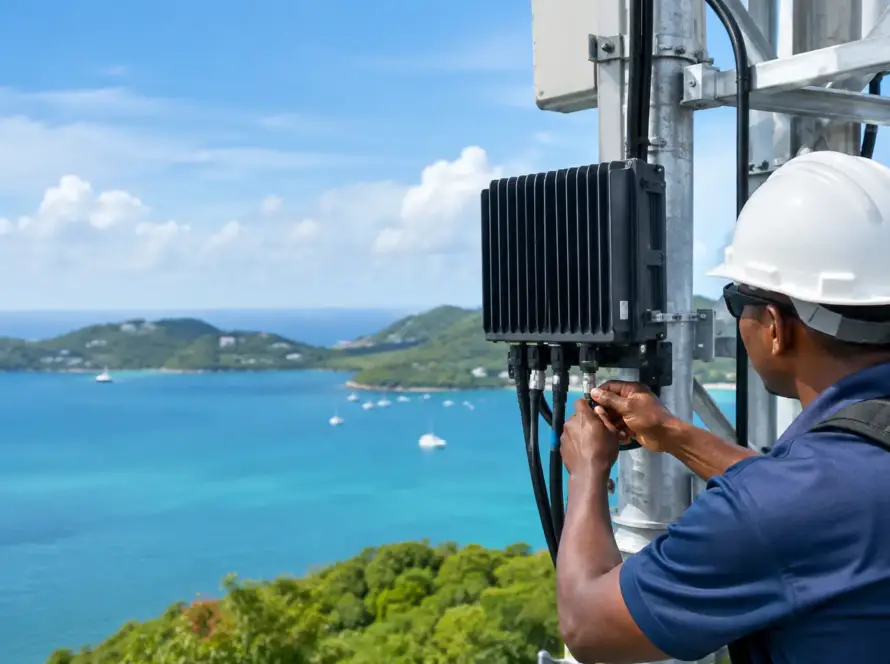
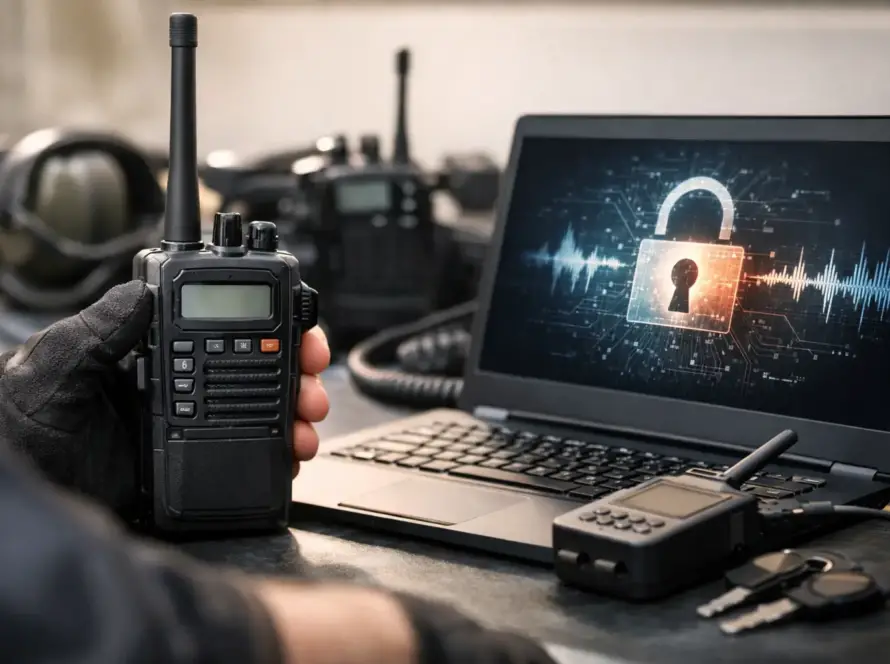
A radio can sound excellent on a desk and still fail the real test: a maintenance crew moving between concrete structures, a marina team working through wind and engine noise, or staff crossing uneven terrain with limited cellular service. This Hytera handheld radio review looks at what matters when the device has to support day-to-day operations in the U.S. Virgin Islands, not simply check a specification box.
For businesses, public-sector teams, maritime operations, and field personnel, a handheld radio should be evaluated as part of a communications system. The radio matters, but so do coverage design, programming, accessories, charging practices, maintenance, and the local support behind it.
What Hytera Handheld Radios Do Well
Hytera’s handheld portfolio covers conventional analog radios, digital mobile radio (DMR) devices, and Push-to-Talk over Cellular (PoC) options. That range is valuable because not every organization has the same coverage requirement, operating budget, or need for advanced features.
At the practical level, Hytera radios are designed around clear voice communications, durable field use, configurable channels, and a range of accessories. For a supervisor, that may mean direct contact with staff across a property. For a fleet or facilities manager, it can mean keeping drivers, dispatch, and mobile crews connected without relying on personal phones for every routine exchange.
DMR-capable handhelds are especially useful for organizations moving beyond basic analog operation. Digital voice can improve audio consistency at the edge of coverage and can support more efficient use of licensed spectrum. Depending on the system design and device model, organizations may also use features such as individual calling, group calling, text messaging, emergency alerts, GPS location services, and remote management.
The value of those features depends on the operation. A small team operating within one facility may need little more than dependable voice and a properly selected earpiece or speaker microphone. A distributed operation across Saint Thomas, Saint John, and Saint Croix may benefit more from a managed DMR or PoC solution with defined talk groups, priority procedures, and wider-area coverage.
Hytera Handheld Radio Review: Key Buying Factors
A useful review starts with the operating environment rather than the product brochure. The right handheld is the one that fits the coverage plan, the users, and the consequences of a missed call.
Audio quality in difficult environments
Clear audio is often the first thing users notice. Engine rooms, docks, construction areas, roadside work, and crowded hospitality properties all create noise that can overwhelm an ordinary conversation. A radio with appropriate noise reduction, a quality speaker, and the right accessory can materially improve communication in these settings.
However, audio performance is not only a radio issue. Poor microphone placement, a damaged accessory, low battery condition, and incorrect programming can all make a capable device seem inadequate. Before replacing radios, organizations should confirm that accessories, channels, and system settings are working as intended.
Durability and environmental readiness
Island operations place equipment under continuous pressure from heat, humidity, rain, salt air, dust, and daily handling. A handheld radio should be selected with its ingress protection rating, construction, battery design, and accessory connection in mind.
Higher protection ratings can be worthwhile for marine-adjacent work, utilities, outdoor maintenance, and crews exposed to frequent weather. Yet a higher-rated radio is not a substitute for basic care. Radios should be stored dry, charging contacts should be kept clean, and damaged antennae or seals should be addressed promptly. Salt exposure in particular can shorten the life of equipment that is otherwise well built.
Battery life and charging discipline
Battery performance affects both safety and productivity. A radio that lasts through a full shift is useful only if users begin the shift with a healthy, charged battery. For extended operations, organizations should consider spare batteries, multi-unit chargers, vehicle charging, and a clear process for rotating batteries out of service when their capacity declines.
The trade-off is cost and management. Extra batteries and charging infrastructure add expense, but they reduce the risk of a communications gap during long shifts, storm preparation, special events, or emergency response. For teams with round-the-clock operations, battery planning should be part of the deployment plan rather than an afterthought.
Coverage and radio technology
No handheld radio creates coverage by itself. Conventional analog and DMR radios depend on the radio frequency environment, antenna systems, terrain, building construction, and, when needed, repeaters. In hilly areas or between islands, a site survey and system design may matter more than the difference between two handheld models.
PoC handhelds take a different approach. They use cellular or Wi-Fi connectivity to provide wider-area push-to-talk communication. For organizations with reliable network availability across their travel routes, PoC can connect users over a much larger footprint than a conventional local radio system. It can also be a practical option for teams that operate across multiple sites.
The trade-off is dependency on network coverage and service availability. PoC is not a universal replacement for radio frequency systems, particularly where cellular service is inconsistent or where a dedicated local communications path is required. Some operations benefit from a mixed approach, using DMR for on-site and contingency communications while PoC supports routine wide-area coordination.
Ease of use and programming
A handheld radio is most effective when users can operate it without hesitation. Clearly labeled channels, consistent talk-group names, practical button assignments, and a short user orientation can reduce avoidable errors. In high-turnover environments, simple operation has real operational value.
Advanced functions should be enabled with purpose. Emergency buttons, man-down alerts, lone-worker functions, GPS, and text features can support safety and accountability, but only when policies explain how the organization will respond. Enabling an emergency alert without a defined monitoring process creates false confidence.
Where the Trade-Offs Appear
Hytera handheld radios offer strong options across different operational levels, but there is no single best choice for every buyer. Entry-level devices can be a sound fit for teams that need basic, reliable voice communications in a defined area. They are often easier to issue, train on, and replace.
More capable DMR models can justify their cost when the organization needs more users, better spectrum efficiency, data features, safety functions, or integration with a larger radio system. The additional capability also brings more planning. Channels, permissions, talk groups, firmware, batteries, and accessories need to be managed consistently.
PoC devices can simplify wide-area communication for mobile workforces, but they should be assessed against actual carrier coverage, data plans, building connectivity, and continuity requirements. A good deployment does not choose a technology because it is newer. It chooses the communications path that remains usable where the team actually works.
A Practical Deployment Approach
Before selecting handhelds, define the operational need in plain language. Identify who needs to speak with whom, where they work, what conditions affect communication, and what happens if a call does not get through. Then test representative devices in the real environment, including the noisiest locations and the edges of the expected coverage area.
A complete evaluation should include radio fit, accessory comfort, charging workflow, coverage verification, programming standards, and repair support. It should also account for future growth. A system that supports one property today may need to connect field teams, vehicles, or additional sites later.
Cwave Communications, an authorized Hytera dealer, helps organizations evaluate these decisions with local operating conditions in mind. The goal is not to sell the most complicated handheld. It is to put dependable communications in the hands of the people who need them and support the system throughout its service life.
The Bottom Line for Operational Teams
Hytera handheld radios are a credible choice for organizations that need scalable voice communications, from straightforward on-site use to managed digital and cellular-connected deployments. Their strongest advantage is the breadth of available approaches: analog for simplicity, DMR for structured digital radio operations, and PoC for broader network-based communications.
The best result comes from matching the handheld to a properly designed system. Test the radio where crews work, select accessories for the job, establish charging and maintenance routines, and make sure support is available when equipment needs attention. Reliable communications are built long before the first call is made.